
Category: 未分类

  • Poverty may kickstart the next pandemic

    A crumpled blue surgical mask sits on an asphalt street.

    Socioeconomic factors may be a driving force behind the emergence and spread of animal-borne disease outbreaks, according to new research.

    The study found that outbreaks of bacterial diseases, such as tuberculosis, plague, and salmonella, were caused by things like poverty, international travel, and poor access to health care, among others.

    Meanwhile, environmental factors like changing weather patterns, natural disasters, close contact with livestock or wildlife can spark viral disease outbreaks. But it is often socioeconomic factors that help these diseases spread widely.

    “It’s important to think about what conditions we are creating that might lead to disease outbreaks in the future,” says Payton Phillips, lead author of the study and a postdoctoral researcher at the University of Georgia’s Savannah River Ecology Laboratory.

    “It’s our behavior, our medical systems, our travel, our economic conditions that play a role in disease outbreaks.

    “Knowing that these factors are so important, we need to push for better sanitation, improved water quality, and more funding for medical interventions to keep outbreaks under control.”

    The researchers analyzed data from more than 300 global disease outbreaks, including the 100 largest outbreaks between 1977 and 2017. The scientists examined 48 different drivers of disease outbreaks, divided into socioeconomic or environmental categories.

    Some of the socioeconomic factors included antibiotic use, contaminated water and food, sewage management, and public health infrastructure. Environmental factors included climate change; the spread of disease vectors, such as mosquitoes; and the introduction of invasive species, among others.

    “If we know there are socioeconomic issues, like if water sanitation is a problem for a local area, then we can try to address it ahead of an outbreak,” Phillips says. “We can and should be more proactive.”

    More than six out of every 10 infectious diseases in people originate in animal populations, according to the Centers for Disease Control and Prevention. And 75% of emerging diseases come from animals.

    People originally become infected with these diseases through interactions with animals. This can happen directly, such as touching a sick animal or being bitten by one, or indirectly by consuming contaminated water or food, like raw milk or undercooked meat.

    “Many viruses are naturally found in certain animals,” Phillips says. “But it’s our behavior that allows them to spread.”

    For example, scientists believe the viruses that cause Ebola originated in bats. Once an Ebola outbreak spills over into humans, the disease begins rapidly spreading from person to person.

    Not every disease is capable of human-to-human spread. Avian influenza, for instance, appears to not easily spread from one infected person to another. But as more species are infected with a virus or bacteria, the threat of evolution—and the ability to spread between people—rises.

    The study appears in Microorganisms.

    Additional coauthors are from the University of Georgia and Oklahoma State University.

    Source: University of Georgia

    The post Poverty may kickstart the next pandemic appeared first on Futurity.
  • ‘Aha! moments’ help you remember what you learn

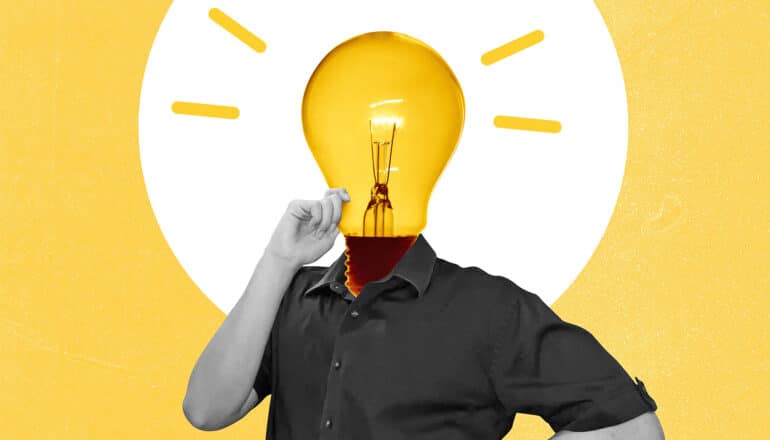
    A person's head is replaced with a photo of a lightbulb as they look deep in thought.

    New evidence from brain imaging research shows that “aha! moments” aren’t just satisfying — they actually reshape how your brain represents information, and help sear it into memory.

    The work has implications for education, suggesting that fostering “eureka moments” could help make learning last beyond the classroom.

    If you have an aha experience when solving something, “you’re actually more likely to remember the solution,” says first author Maxi Becker, a postdoctoral fellow at Humboldt University in Berlin.

    In the study, the researchers used a technique called functional magnetic resonance imaging (fMRI) to record people’s brain activity while they tried to solve visual brain teasers. The puzzles required them to “fill in the blanks” of a series of two-tone images with minimal detail, using their perception to complete the picture and identify a real-world object.

    Such hidden picture puzzles serve as small-scale proxies for bigger eureka moments.

    “It’s just a little discovery that you are making, but it produces the same type of characteristics that exist in more important insight events,” says senior author Roberto Cabeza, a professor of psychology and neuroscience at Duke University.

    For each puzzle the participants thought they solved, the researchers asked whether the solution just popped into their awareness in a flash of sudden insight, or whether they worked it out in a more deliberate and methodical way, and how certain they were of their answer.

    The results were striking.

    Participants tended to recall solutions that came to them in a flash of insight far better than ones they arrived at without this sense of epiphany. Furthermore, the more conviction a person felt about their insight at the time, the more likely they were to remember it five days later when the researchers asked them again.

    “If you have an ‘aha! moment’ while learning something, it almost doubles your memory,” says Cabeza, who has been studying memory for 30 years. “There are few memory effects that are as powerful as this.”

    A number of changes in the brain may cause people to have better memory for “aha! moments,” the researchers found.

    They discovered that flashes of insight trigger a burst of activity in the brain’s hippocampus, a cashew-shaped structure buried deep in the temporal lobe that plays a major role in learning and memory. The more powerful the insight, the greater the boost.

    They also found that the activation patterns across the participants’ neurons changed once they spotted the hidden object and saw the image in a new light—particularly in certain parts of the brain’s ventral occipito-temporal cortex, the region responsible for recognizing visual patterns. The stronger the epiphany, the greater the change in those areas.

    “During these moments of insight, the brain reorganizes how it sees the image,” says Becker, who did the work in the Cabeza lab.

    Lastly, stronger “aha!” experiences were associated with greater connectivity between these different brain regions. “The different regions communicate with each other more efficiently,” Cabeza says.

    The current study looked at brain activity at two specific moments in time, before and after the eureka moment when the lightbulb appeared. As a next step, the researchers plan to look more closely at what happens during the few seconds in between that allows people to finally see the answer.

    “Insight is key for creativity,” Cabeza says. In addition to shedding light on how the brain comes up with creative solutions, the findings also lend support for inquiry-based learning in the classroom.

    “Learning environments that encourage insight could boost long-term memory and understanding,” the researchers wrote.

    Researchers used fMRI to map the brain activity of 31 participants while they solved hidden picture puzzles. The more intense their “aha! moment,” the more blood flow there was to those parts of the brain.

    The research appears in Nature Communications.

    Researchers from Humboldt and Hamburg Universities in Germany also contributed to the work.

    Funding for this research came from the Einstein Foundation Berlin and the Sonophilia Foundation.

    Source: Duke University

    The post ‘Aha! moments’ help you remember what you learn appeared first on Futurity.

  • Did the US wipe out Iran's nuclear programme? What researchers know

    Nature, Published online: 23 June 2025; doi:10.1038/d41586-025-01992-2

    Nuclear policy specialist David Albright told Nature how his organization is monitoring for damage to nuclear sites following US and Israeli strikes.

  • Gating and noelin clustering of native Ca<sup>2+</sup>-permeable AMPA receptors

    Nature, Published online: 23 June 2025; doi:10.1038/s41586-025-09289-0

    Gating and noelin clustering of native Ca2+-permeable AMPA receptors

  • Modular arene functionalization by differential 1,2-diborylation

    Nature, Published online: 23 June 2025; doi:10.1038/s41586-025-09284-5

    Modular arene functionalization by differential 1,2-diborylation

  • Why you should assume that even the simplest animals are conscious

    There is mounting evidence that even surprisingly simple animals, like invertebrates, have a level of consciousness – but not in the way you might think

  • At last, we are discovering what quantum computers will be useful for

    Quantum computers have been hyped as machines that can solve almost any problem. Yet it is becoming clearer that their near-term utility will be narrower

  • Orcas scrub each other clean with bits of kelp

    Drone footage has captured killer whales breaking off stalks of kelp and rubbing the pieces on other orcas, a rare case of tool use in marine animals

  • Stellar flares may hamper search for life in promising star system

    Astronomers have been trying to detect atmospheres on planets orbiting TRAPPIST-1, but bursts of radiation from the star make this challenging

  • The deep lessons quasiparticles teach us about the nature of reality

    We have discovered legions of strange particles that seem to only have a ghostly existence inside materials. Even so, they are the basis of much modern technology – so are they actually real?