Category: 未分类

  • I Was Not Prepared

    By Mike Fitz

    I was not prepared for what I saw.

    I know people say that about total solar eclipses. I interviewed a NASA scientist who explained as much. Even though I never doubted their sincerity, people who have experienced total solar eclipses say it so much—“I wasn’t prepared”—that you wonder whether the sentiment is some type of collective exaggeration, an eclipse-inspired Mandela effect.

    Friends, it is not. I was not prepared.

    My planning for the April 8, 2024 total solar eclipse began about three years ago after learning that my house in Maine was within the eclipse’s path of totality. Early reconnaissance work was as easy as standing outside on a sunny afternoon in early April 2021 and April 2022 and (just to be sure) April 2023 to best understand where the Sun would be in the sky. Fortunately, a spot in the driveway provided a clear view to the southwest where the eclipse would wax and wane. Might a webcam view become possible too? I thought so, and the explore.org team concurred.

    So on April 8 I plugged in a webcam, pointed it toward the Sun, connected with a camera operator (thank you, CamOp Arya for driving the cam), and waited under brilliant clear skies.

    I had seen eclipses before-a total lunar eclipse over Pinnacles National Park in California, a partial lunar eclipse from Katmai National Park in Alaska, and a partial solar eclipse from Stehekin in Lake Chelan National Recreation Area in Washington. The eclipsed object in each, though, whether the Sun or the Moon, remained visible throughout.

    The partial solar eclipse I experienced in Stehekin prepared me to expect changes in air temperatures and daylight. During the peak of the 2017 eclipse, I felt the air cool as the sun’s intensity lessened. I heard a nighthawk, a typically crepuscular and nocturnal bird, call from the sky. Perhaps there would be a chance to observe similar phenomena as the 2024 eclipse began.

    Eclipses always seem to begin slowly. For nearly an hour, I could feel or see little change except for a growing cleft in the Sun. About 20 minutes before totality, with greater than 75 percent of the Sun covered by the Moon, the remaining light shifted to a dull hue like that of a lightbulb which is not bright enough for the room. I felt the temperature decline soon after. In the waning minute before totality, daylight faded to that given by a bright full moon. The air got colder still.

    The experience was fascinating, but totality during a solar eclipse is something entirely different, they say. Even 99 percent coverage of the Sun by the Moon isn’t the same, they say. I watched and wondered. Is that true?

    At its thinnest crescent, the sun remained too bright to view without proper eye protection. The Sun’s final arc glowed through my eclipse glasses. Then the lights went out.

    It happened so suddenly. A shadow traveling at 2,000 miles per hour swept over the land. The Sun vanished. I gasped with an almost unconscious response.
    eclipse, totality

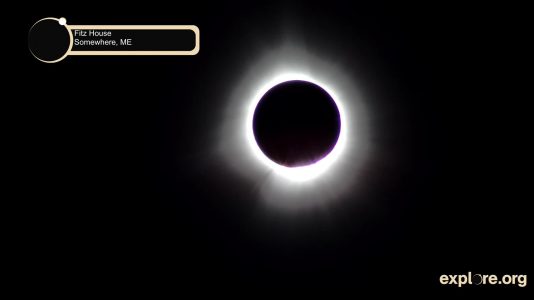
    Snapshot from CamOp Orion of totality during the April 8, 2024 eclipse.

    I thought I could take good photos. I couldn’t. I thought I could focus my mind to somehow slow my perception of time to prolong the experience. I couldn’t. I thought I’d try to listen for behavioral changes in wildlife. I didn’t.

    Not during totality. I could only look with awe.

    The Sun’s corona glowed in a halo of wispy light around the moon. Baily’s beads twinkled on the Moon’s edges. Mercury, Venus, and Jupiter appeared. The blue-black sky at zenith faded to orange on the far horizons, all horizons, like the final radiance of long past sunset.
    earth, eclipse, NASA

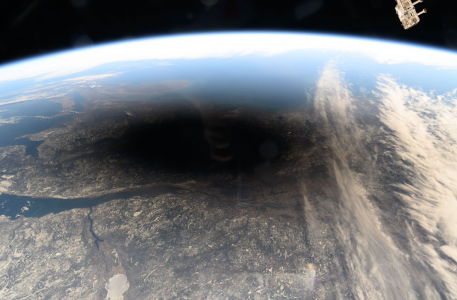
    The Moon’s shadow covers portions of Canada and the U.S. on April 8, 2024 as seen from the International Space Station. The view looks east. Maine and New Brunswick are centered under the Moon’s shadow. The Saint Lawrence Seaway is the wedge of water at left and slightly below the Moon’s shadow. The Atlantic Ocean occupies the top section of Earth. Photo courtesy of NASA.

    But more than anything, it is the blackness of the Moon that I can’t get out of my head. 

    I’ve been in caves. I’ve led tours where I’d purposely turn out all lights to experience complete darkness, a darkness that your eyes can never adjust to. That experience removes all objects from your sight. Totality of the eclipse was different. Light remained. The Sun should have been there. It was there, as was the Moon, but the effect was so outside my normal experience that it almost defied my senses. The Sun—the brightest object I can directly perceive with my own senses–was replaced by the blackest object I’ve ever seen. The Moon became a heavenly body defined by its absence of light.

    I went to bed that night thinking about it. I woke the next morning thinking about it. I’m thinking about it now, days later.

    Totality ended, it seemed, as soon as it began. More than three minutes felt like 30 seconds or less. The Earth’s surface brightened the moment the Sun reappeared from behind the Moon. The look and feel of the land returned to normal within minutes.

    My eclipse photos are blurry. I think the shutter speed was a little too slow or perhaps the focus was slightly off.  Perhaps that is unimportant. No photo or video truly captures the experience of a total solar eclipse as you sense it. I’m not sure what to compare it to. It is like the profound difference between looking at a photo of a loved one and holding them in your arms.

    Even now, I could fool myself into questioning whether I truly saw what happened. The Sun’s vanishing act was so sudden. Its most intense light was erased. If there is a moment when a person can be star-struck, this was it.

    I was not prepared.
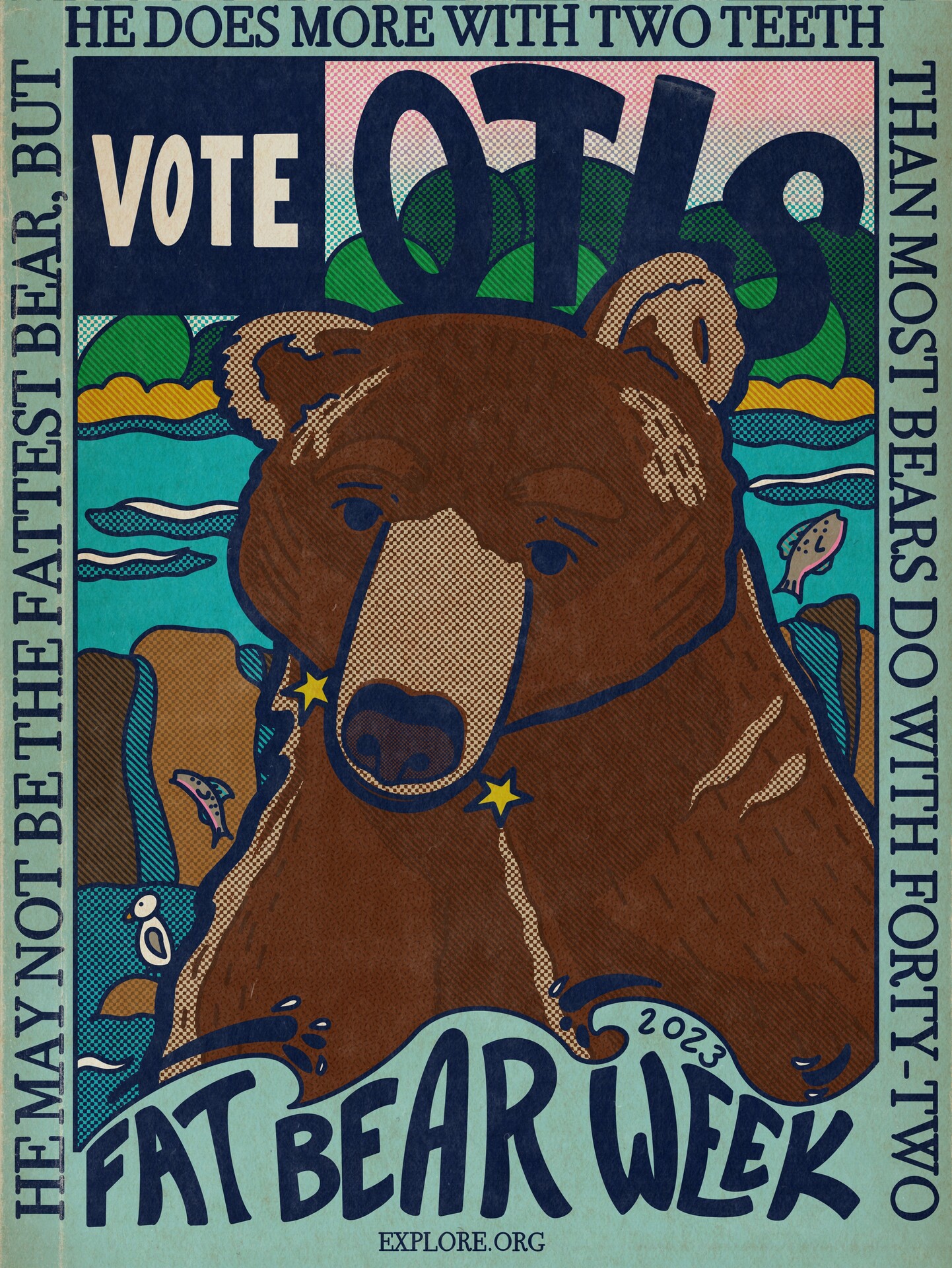
  • Fat Bear Campaign Poster Winners – 2023

    1. by Elizabeth Cason – This is the underdog we all need.

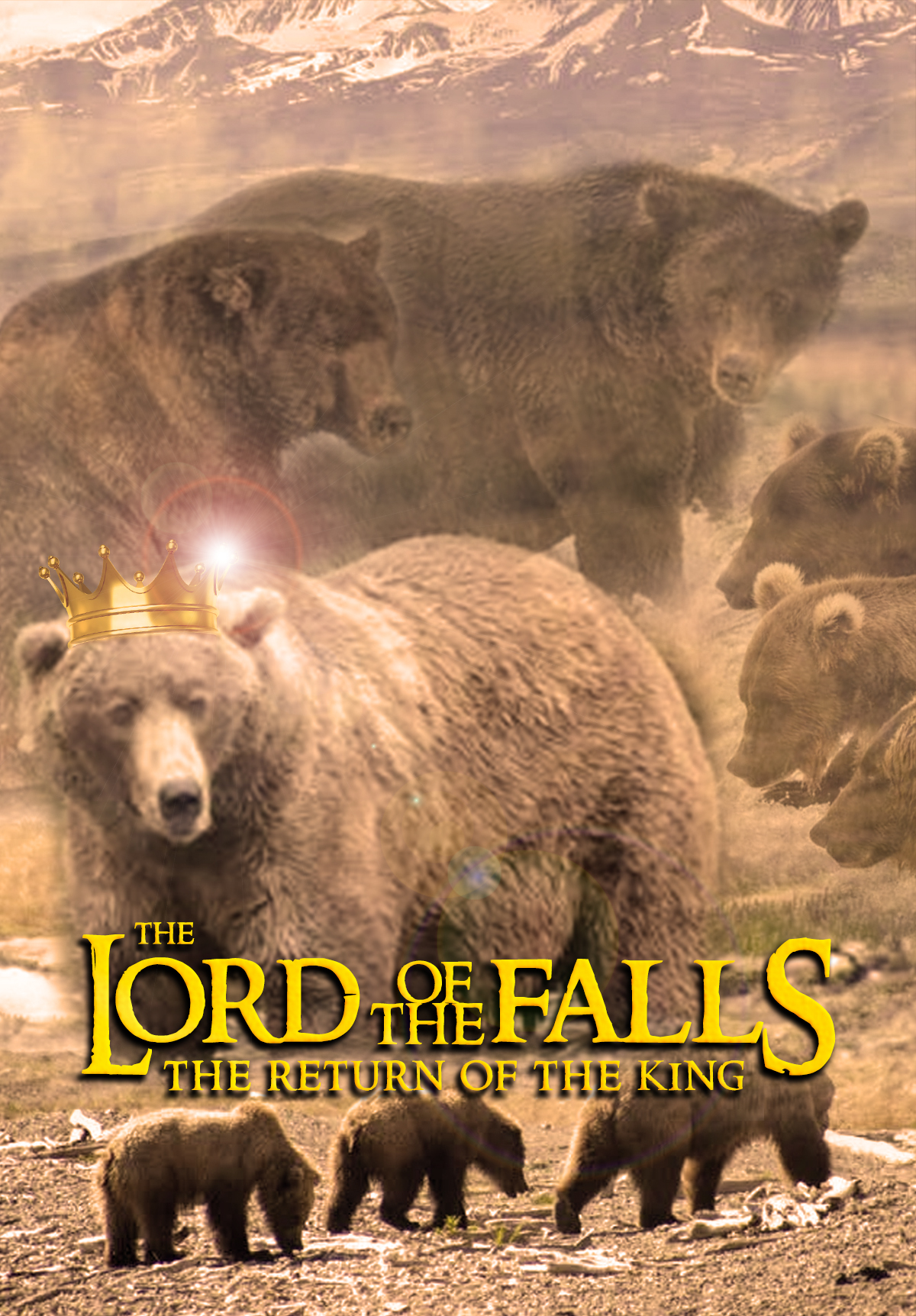
    2. By Hannah Bishop – We’ve all heard of the Lord of the Rings, but the Lord of the Falls is far superior in my book!

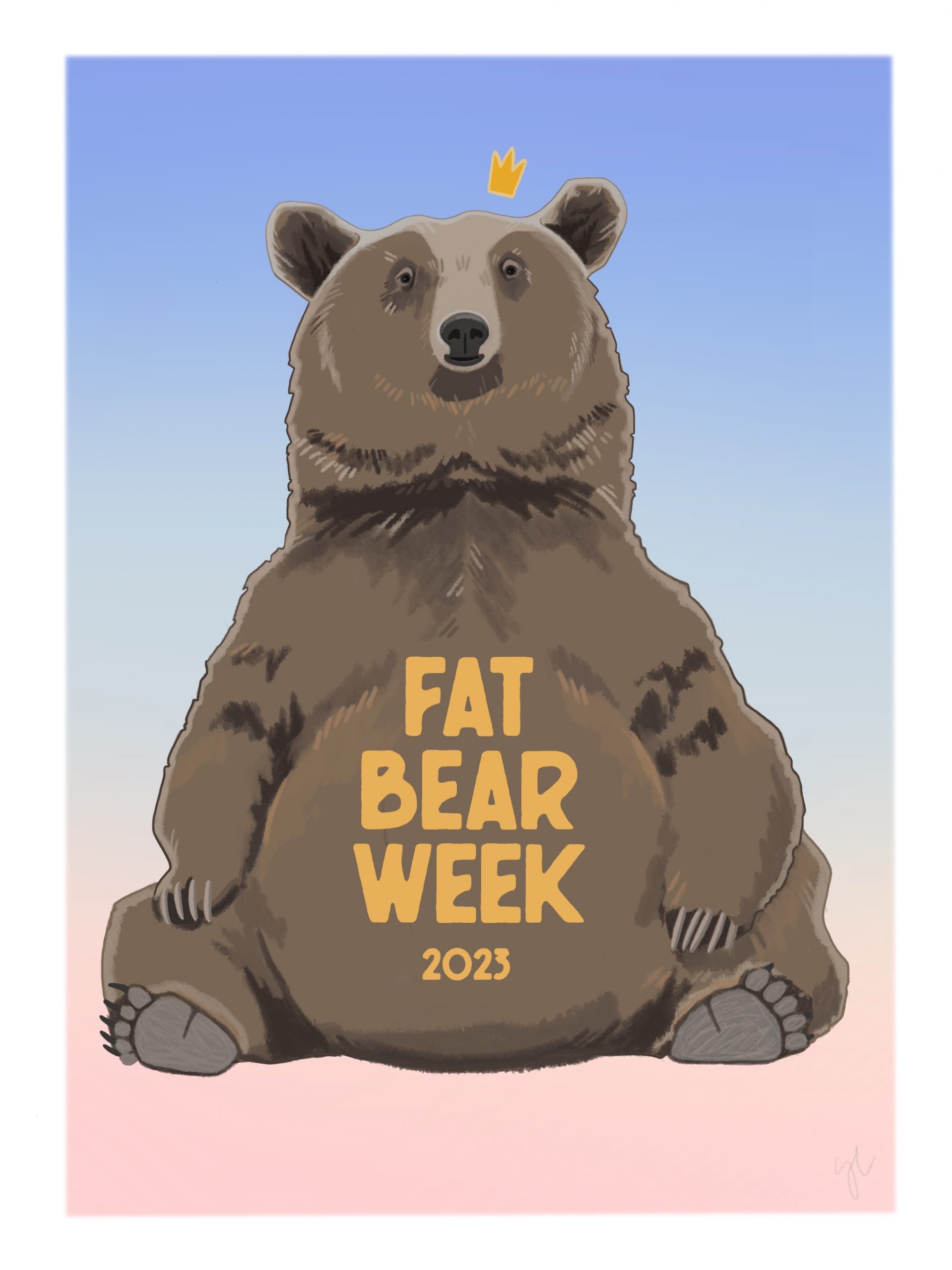
    3. Sara Curtis – May the fattest win.

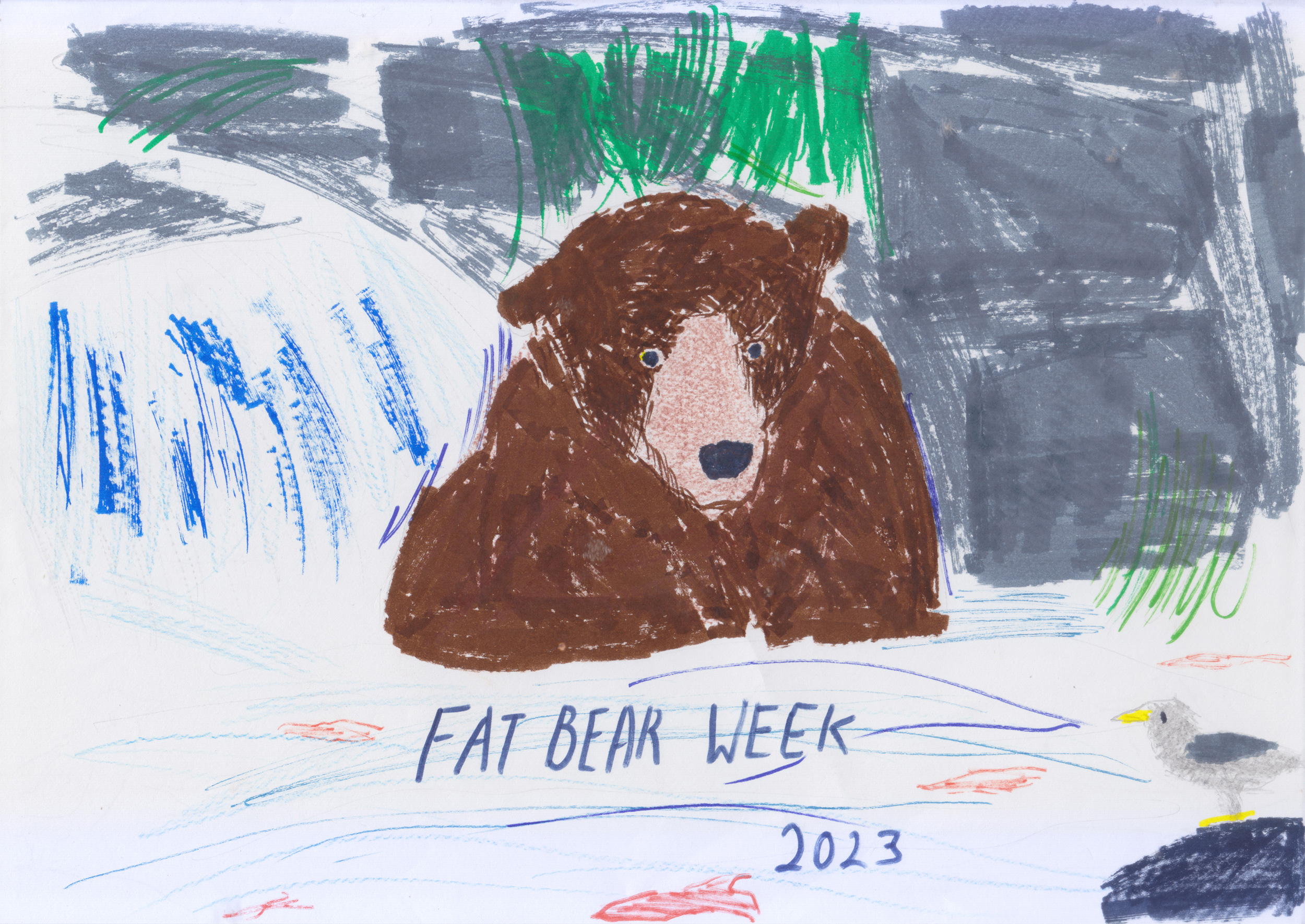
    4. I love you, Otis! – Claire, age 10

    5. Nick Day

    Fluffy and great,

    salmon on my plate,

    winning is my fate!

    Vote for holly, don’t be late!

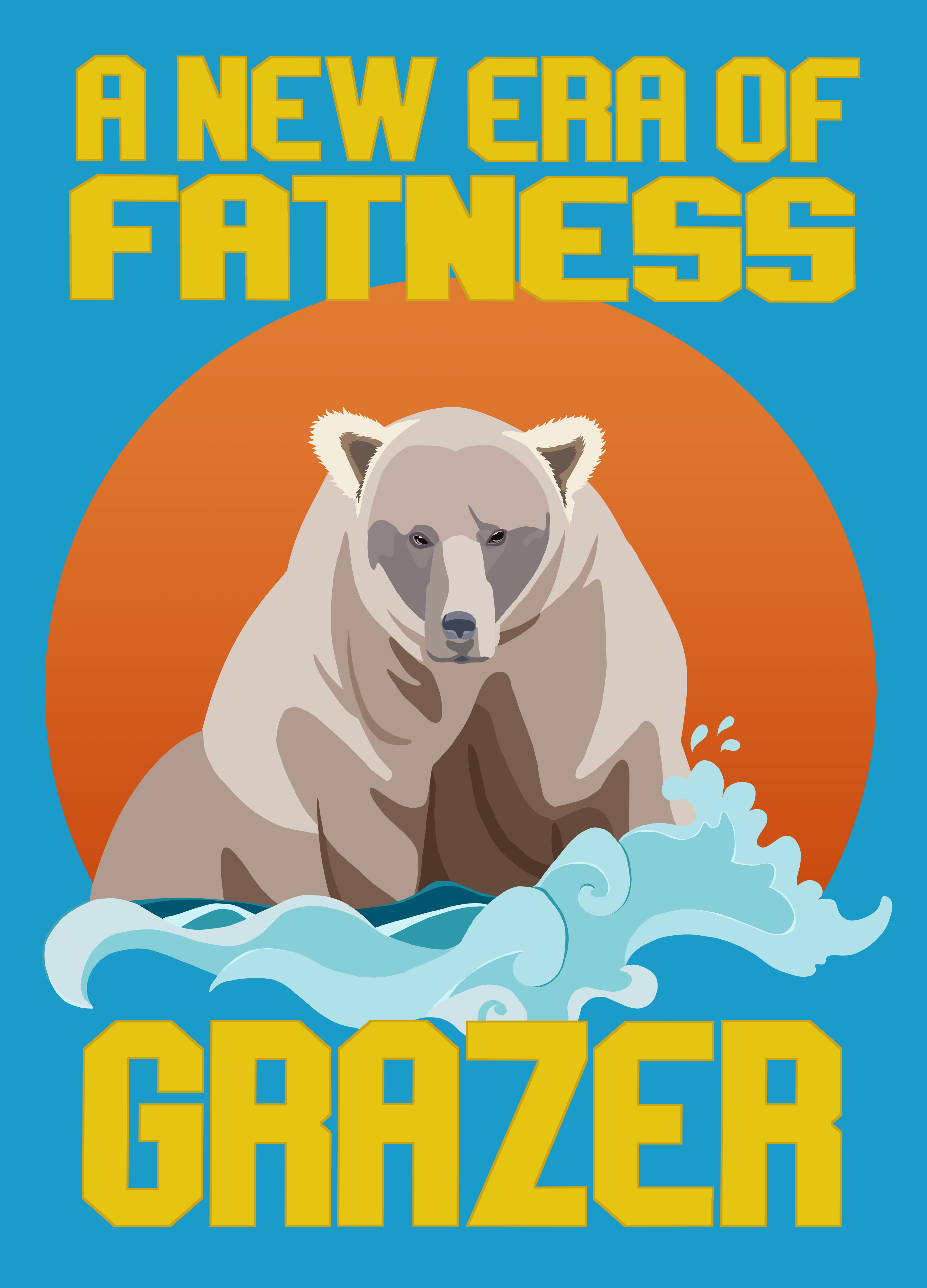
    6. #1 grazer stan – It’s time for a new champion of fatness. Time for a bear who has put in the work day after day, night after night, dedicating herself to corpulence. It’s time for Grazer.

    7. Kankana Shukla

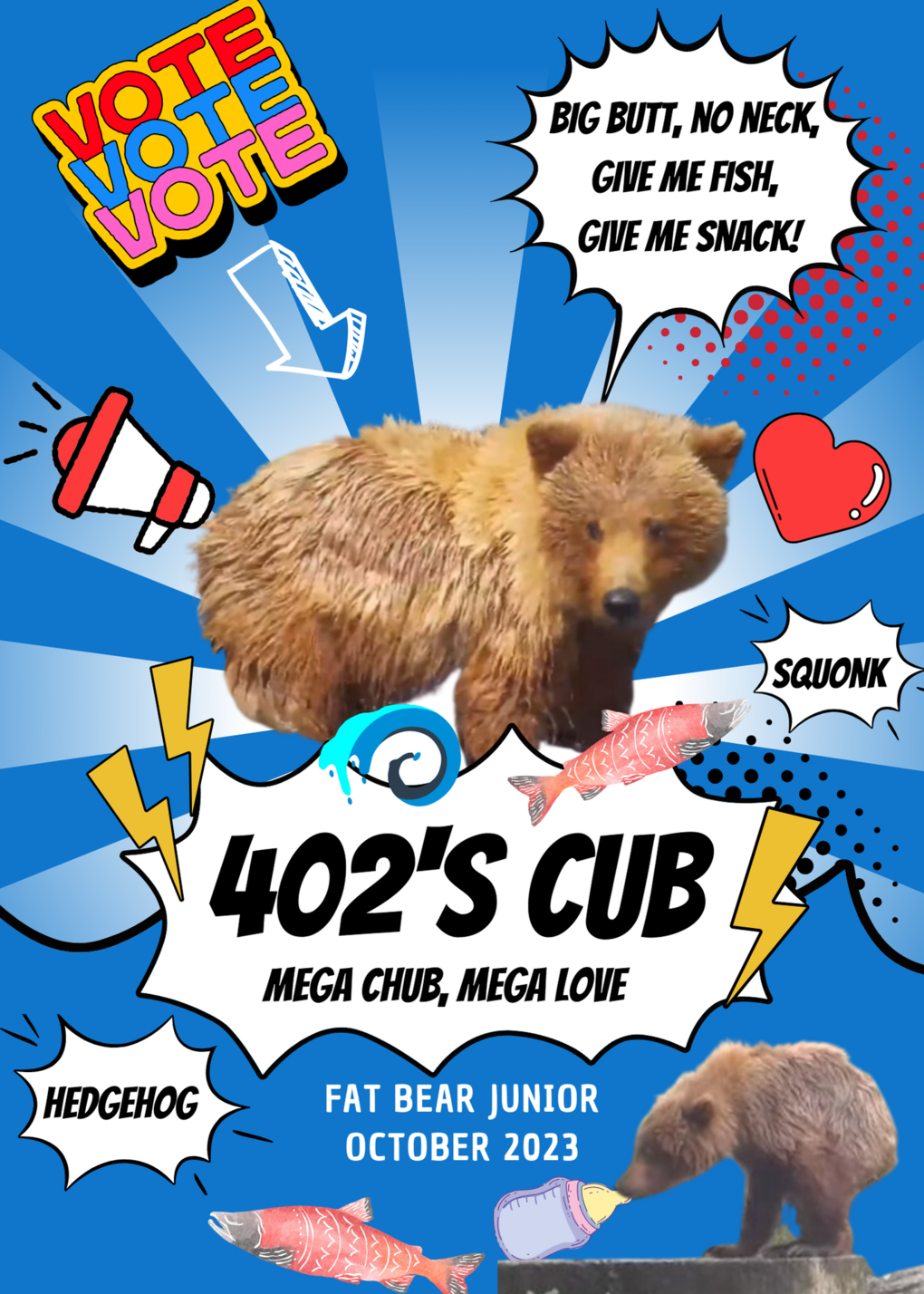
    Big butt, no neck, give me fish, give me a snack!

    Vote for 402’s cub!

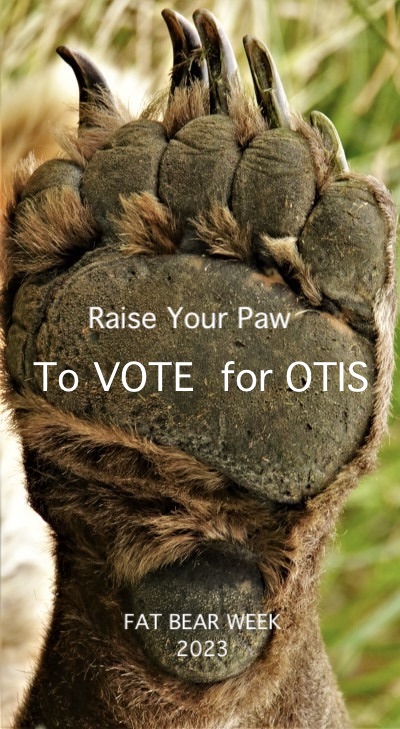
    8. ‘Boobeary’ Derrick – Paw vote for Otis.

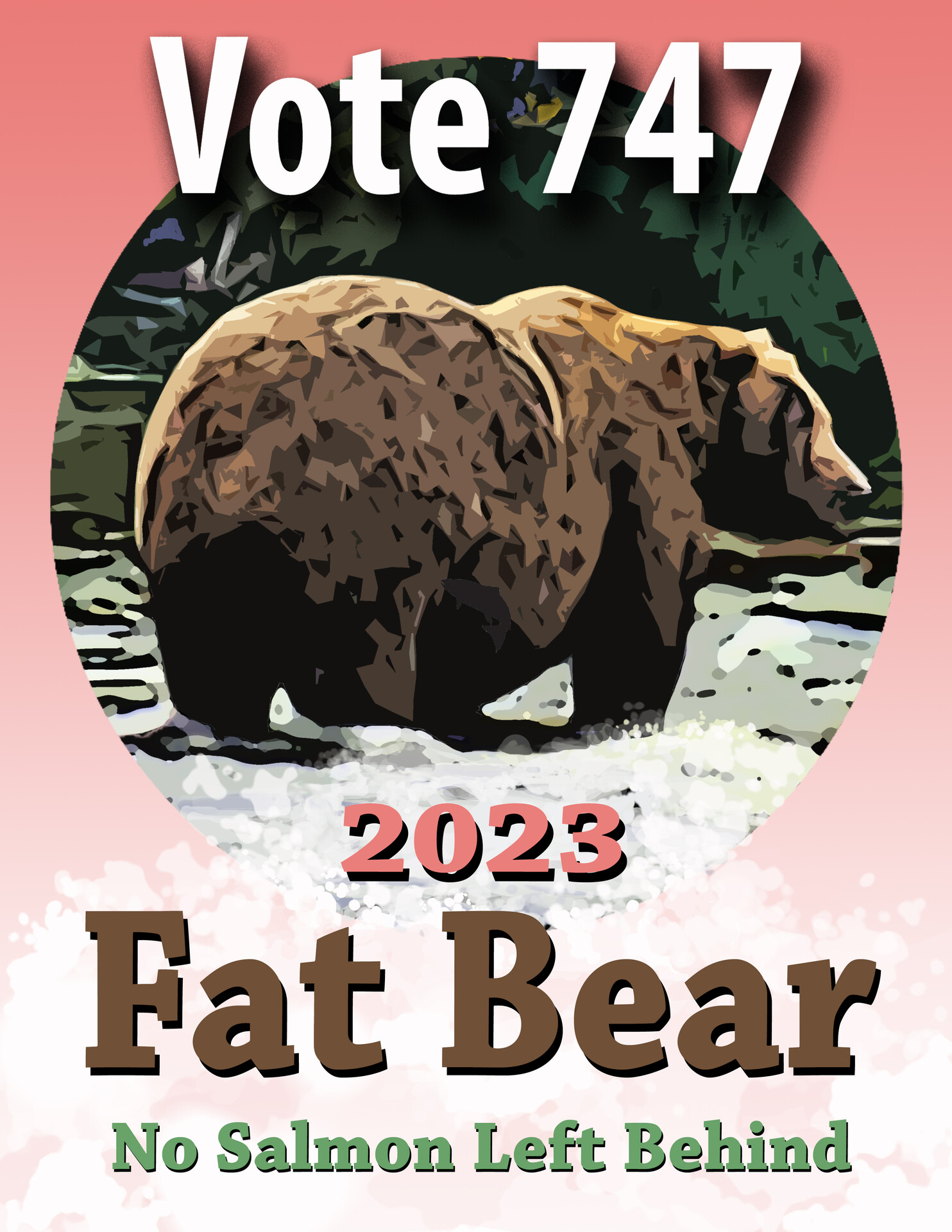
    9. Studio Prof – Look at that, no salmon left behind.

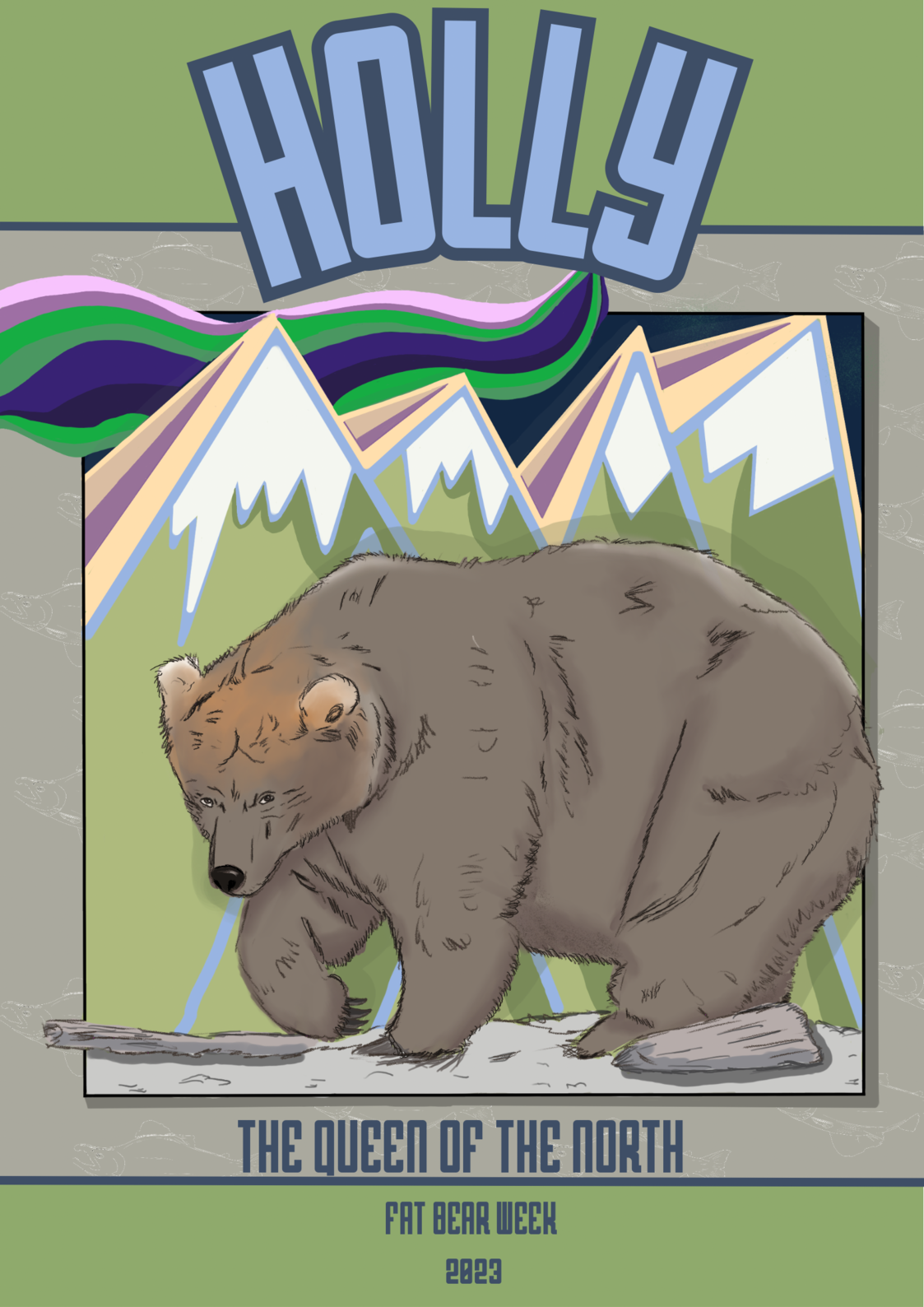
    10. Tracy Pettit – Holly – Queen of the North


  • Does Otis the bear inspire support for conservation?

    By Mike Fitz

    If you watch any of the wildlife or animal-themed cams on explore.org, then you know that they provide an exceptional lens through which we can view the lives of individual animals. The gorilla Pinga’s leadership and maternal devotion allowed her blended family group at GRACE to heal from trauma. The California condor Inikio survived wildfire only to be prematurely evicted from her nest by another condor. The legendary brown bear Otis is a quintessential example of longevity and adaptability in bears.

    During my bear cam live chats, I focus a lot on the lives of individual bears and then relate those bear’s experiences to bigger ideas. Understanding how Otis has adapted to a lower rank in the bear hierarchy, for example, allows us to better understand how old bears adapt to change and challenge.

    However, there’s relatively little in the scientific literature exploring how personal connections to individual animals affect a person’s support for conservation. In fact it’s been argued that this is a myopic strategy, and most conservation efforts focus on the species level. The individual animals that we watch on explore.org each have a large and devoted following, so how might our connection to individual animals influence our support for conservation of a species? A new paper, of which I’m a coauthor, finds that individual and favorite animals can have a large, positive influence on our attitudes toward conservation efforts.

    My research colleagues on this project developed an online survey of bear cam viewers that was available in summer 2019 and summer 2020. When survey participants were asked if they could identify individual bears 14% of viewers said yes, 56% responded sometimes, and 30% said no. Viewers who could identify individual bears were also asked how many individual bears they could identify. Twenty-one percent of those respondents indicated they could identify one bear, 45% could identify 2–4 bears, 20% could identify 5–7 bears, and 14% could identify more than 7 bears. When asked if they have a favorite bear 53% responded yes and 47% responded no.

    So what do those results mean? Not much until we examined the answers to follow-up questions. In particular, viewers were asked to rate their agreement with the statement “the ability to learn about and/or identify individual bears influences my willingness to support conservation programs.” The question was on a scale of 1 (strongly disagree) to 7 (strongly agree). Those who could identify individual bears agreed with that statement at significantly higher levels (4.86 ± 1.86) than those respondents who could not identify individual bears (3.31 ± 1.80). Importantly, those who said they had a favorite bear reported even higher levels of support for bear conservation (5.01 ± 1.58). These results are consistent with another study based on the same survey that found the ability to identify individual bears positively influences a person’s willingness to pay to protect individual brown bears. Furthermore, intentionally watching the bearcams when a specific bear was on screen yielded better conservation outcomes according to the survey results (that is, if you said you watched the bear cams more when Otis or 503 or another favorite bear were on camera then you were more likely to state you supported bear conservation).

    A separate series of questions in the survey aimed to evaluate a person’s emotional connection to brown bears through a statistical method called conservation caring. This is a numerical measure of a person’s positive emotional connection to species or place. These questions were on a scale of 1 (strongly disagree) to 9 (strongly agree). A higher score indicated a greater emotional connection. Viewers who could identify individual bears had significantly higher conservation caring levels (7.06 ± 1.68) than viewers who could only identify individual bears sometimes (6.81 ± 1.54) and viewers who could not identify individual bears (5.85 ± 1.70). Conservation caring levels also climbed with the number of bears a person said they could identify.

    If you can’t identify bears on the bear cam, then don’t worry. It’s not a competition and I’ll continue to work to give everyone the tools and stories that allow us to connect with individual bears. I also know there are many people who still care for bears greatly but don’t place as much of an emphasis on getting to know individuals. What’s more important is that we recognize the individuality of wild animals and acknowledge that they are not automatons acting merely on instinct. They think and feel and their lives are important in the conservation of entire species. Other Otis-like bears doing Otis-like things roam over wild areas of North America, and if we can secure and maintain healthy habitat for Otis then other bears will benefit.

    We hope to expand on these results and publish more about the influence of individual bears on conservation. I’m also interested in exploring how interpretive events—such as the live chats and Q&As that I lead during the bear cam season—provoke people to act to conserve bears and other wildlife. After all, it’s one thing to say you support wildlife conservation, but it’s another thing to take action.

    Many viewers of explore.org know that watching wildlife through webcams can be a powerful and meaningful experience. With the statistical support of this and future studies, perhaps we can inspire more parks and protected areas to utilize webcams and interpret the lives of individual animals to build greater support for wildlife conservation.

    I’d like to thank the researchers who made this study possible—Jeff Skibins (who drafted this paper and did the data analysis) and Lynne Lewis and Leslie Richardson (who were instrumental in the survey design and implementation). I’d also like to thank the Katmai Conservancy for covering the expense to make the paper available to everyone through open access.

  • Digging foxholes in the dark

    Nature, Published online: 11 June 2025; doi:10.1038/d41586-025-01778-6

    A safe place.

  • Major telescope hosts world's largest digital camera: how it will transform astronomy

    Nature, Published online: 11 June 2025; doi:10.1038/d41586-025-01798-2

    Massive telescope will map the Universe and provide an evolving record of the Solar System and distant stars.

  • 'Impossible' particle that hit Earth may have been dark matter

    We may already have had our first-ever encounter with dark matter, according to researchers who say a mysteriously high-energy particle detected in 2023 is not a neutrino after all, but something far stranger

  • The arid air of Death Valley may actually be a valuable water source

    An innovative device extracted a small glassful of water from the air of Death Valley desert over one day

  • How the brain separates real images from those it imagines

    Nature, Published online: 11 June 2025; doi:10.1038/d41586-025-01752-2

    Neuroscientists have found the regions that keep them apart.

  • Making concrete sustainable globally requires technology transfer

    Nature, Published online: 10 June 2025; doi:10.1038/d41586-025-01812-7

    Making concrete sustainable globally requires technology transfer

  • Daily briefing: Evidence-backed strategies for talking about vaccine hesitancy

    Nature, Published online: 10 June 2025; doi:10.1038/d41586-025-01847-w

    Experts share tips for talking about vaccines with your inner circle. Plus, a tiny device that ‘spins’ blood clots away and why so many attempts to reduce fossil-fuel subsidies fail — and what to do about it.