History tells us what happens when great nations attack science
Briefing
-
Flood Forecasts in Texas and Beyond Could Worsen with Trump NWS Cuts
Forecasts and warnings largely worked during the recent flooding catastrophe in Texas. Those systems are expected to degrade as President Donald Trump’s cuts to the National Weather Service, satellites and other key services take hold
-
Gut Microbe Deficiency in U.S. Babies Tied to Asthma, Allergies, Autoimmune Disorders
Babies lacking in key gut bacteria are at greater risk of developing asthma, allergies or eczema
-
These 5 nutrients might be lacking in your diet
U.S. diets should include more of vitamins D and E, fiber, calcium and magnesium — all are essential nutrients that could offer health benefits.
-
What you should know about artificial food dye concerns
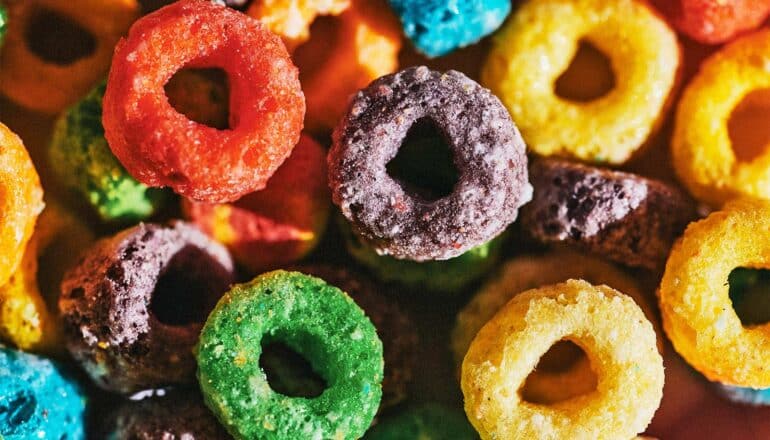
An expert has answers for you about artificial food dyes.
We eat with our eyes. You know this if you’ve ever had a favorite color candy. Food manufacturers also know that people are attracted to brightly colored food.
The first artificial food dyes were introduced more than 150 years ago.
Recent news, however, has reported issues with artificial food dyes. Kraft Heinz and General Mills are now phasing out use of artificial dyes in their US foods in favor of natural coloring. And Texas just passed a law requiring food makers to either remove artificial dyes or include warning labels to alert consumers of their use starting in 2027.
Here, Jamie Alan, an associate professor in the pharmacology and toxicology department at Michigan State University’s College of Human Medicine, explains why artificial dyes in food are a concern:
The post What you should know about artificial food dye concerns appeared first on Futurity.
-
Face analysis tech could spot PTSD in kids

New technology analyzes facial expressions to identify childhood PTSD.
Diagnosing post-traumatic stress disorder in children can be notoriously difficult. Many, especially those with limited communication skills or emotional awareness, struggle to explain what they’re feeling.
Researchers at the University of South Florida are working to address those gaps and improve patient outcomes by merging their expertise in childhood trauma and artificial intelligence.
Led by Alison Salloum, professor in the USF School of Social Work, and Shaun Canavan, associate professor in the Bellini College for Artificial Intelligence, Cybersecurity, and Computing, the researchers are building a system that could provide clinicians with an objective, cost-effective tool to help identify PTSD in children and adolescents, while tracking their recovery over time.
Traditionally, diagnosing PTSD in children relies on subjective clinical interviews and self-reported questionnaires, which can be limited by cognitive development, language skills, avoidance behaviors, or emotional suppression.
“This really started when I noticed how intense some children’s facial expressions became during trauma interviews,” Salloum says.
“Even when they weren’t saying much, you could see what they were going through on their faces. That’s when I talked to Shaun about whether AI could help detect that in a structured way.”
Canavan, who specializes in facial analysis and emotion recognition, repurposed existing tools in his lab to build a new system that prioritizes patient privacy. The technology strips away identifying details and only analyzes de-identified data, including head pose, eye gaze, and facial landmarks, such as the eyes and mouth.
“That’s what makes our approach unique,” Canavan says. “We don’t use raw video. We completely get rid of the subject identification and only keep data about facial movement, and we factor in whether the child was talking to a parent or a clinician.”
The study, which appears in Science Direct, is the first of its kind to incorporate context-aware PTSD classification while fully preserving participant privacy. The team built a dataset from 18 sessions with children as they shared emotional experiences. With more than 100 minutes of video per child and each video containing roughly 185,000 frames, Canavan’s AI models extracted a range of subtle facial muscle movements linked to emotional expression.
The findings revealed distinct patterns are detectable in the facial movements of children with PTSD. The researchers also found that facial expressions during clinician-led interviews were more revealing than parent-child conversations. This aligns with existing psychological research showing children may be more emotionally expressive with therapists and may avoid sharing distress with parents due to shame or their cognitive abilities.
“That’s where the AI could offer a valuable supplement,” Salloum says. “Not replacing clinicians, but enhancing their tools. The system could eventually be used to give practitioners real-time feedback during therapy sessions and help monitor progress without repeated, potentially distressing interviews.”
The team hopes to expand the study to further examine any potential bias from gender, culture, and age, especially preschoolers, where verbal communication is limited and diagnosis relies almost entirely on parent observation.
Though the study is still in its early stages, Salloum and Canavan feel the potential applications are far-reaching. Many of the current participants had complex clinical pictures, including co-occurring conditions like depression, ADHD, or anxiety, mirroring real-world cases and offering promise for the system’s accuracy.
“Data like this is incredibly rare for AI systems, and we’re proud to have conducted such an ethically sound study. That’s crucial when you’re working with vulnerable subjects,” Canavan says. “Now we have promising potential from this software to give informed, objective insights to the clinician.”
If validated in larger trials, the new approach could redefine how PTSD in children is diagnosed and tracked, using everyday tools like video and AI to bring mental health care into the future.
Source: University of South Florida
The post Face analysis tech could spot PTSD in kids appeared first on Futurity.
-
Living building material sucks CO2 out of the air
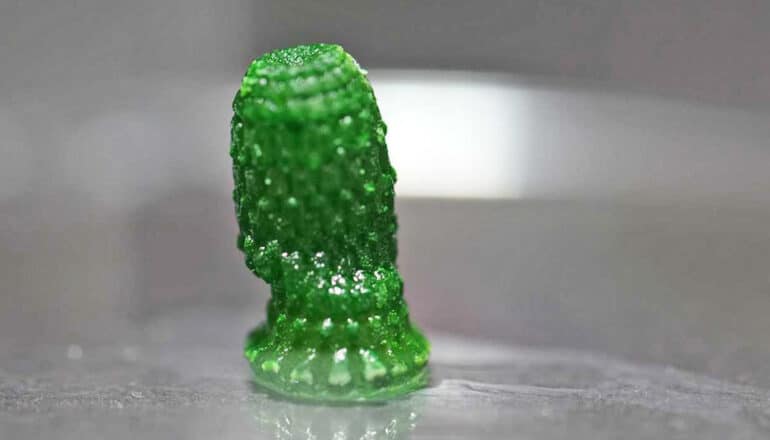
Researchers are developing a living material that actively extracts carbon dioxide from the atmosphere.
The idea seems futuristic: Researchers are working to combine conventional materials with bacteria, algae, and fungi.
“As a building material, it could help to store CO2 directly in buildings in the future.”
The common goal: to create living materials that acquire useful properties thanks to the metabolism of microorganisms—”such as the ability to bind CO2 from the air by means of photosynthesis,” says Mark Tibbitt, professor of macromolecular engineering at ETH Zurich.
A research team led by Tibbitt has now turned this vision into reality: it has stably incorporated photosynthetic bacteria—known as cyanobacteria—into a printable gel and developed a material that is alive, grows, and actively removes carbon from the air.
The researchers recently presented their “photosynthetic living material” in a study in the journal Nature Communications.
Greener buildings
The material can be shaped using 3D printing and only requires sunlight and artificial seawater with readily available nutrients in addition to CO2 to grow.
“As a building material, it could help to store CO2 directly in buildings in the future,” says Tibbitt, who co-initiated the research into living materials at ETH Zurich.
The special thing about it? The living material absorbs much more CO2 than it binds through organic growth.
“This is because the material can store carbon not only in biomass, but also in the form of minerals—a special property of these cyanobacteria,” reveals Tibbitt.
Yifan Cui, one of the two lead authors of the study, explains: “Cyanobacteria are among the oldest life forms in the world. They are highly efficient at photosynthesis and can utilize even the weakest light to produce biomass from CO2 and water”.
At the same time, the bacteria change their chemical environment outside the cell as a result of photosynthesis, so that solid carbonates (such as lime) precipitate. These minerals represent an additional carbon sink and—in contrast to biomass—store CO2 in a more stable form.
“We utilize this ability specifically in our material,” says Cui, who is a doctoral student in Tibbitt’s research group. A practical side effect: the minerals are deposited inside the material and reinforce it mechanically. In this way, the cyanobacteria slowly harden the initially soft structures.
Laboratory tests showed that the material continuously binds CO2₂ over a period of 400 days, most of it in mineral form—around 26 milligrams of CO2 per gram of material. This is significantly more than many biological approaches and comparable to the chemical mineralization of recycled concrete (around 7 mg CO2 per gram).
The carrier material that harbors the living cells is a hydrogel—a gel made of cross-linked polymers with a high water content. Tibbitt’s team selected the polymer network so that it can transport light, CO2, water, and nutrients and allows the cells to spread evenly inside without leaving the material.
To ensure that the cyanobacteria live as long as possible and remain efficient, the researchers have also optimized the geometry of the structures using 3D printing processes to increase the surface area, increase light penetration, and promote the flow of nutrients.
“In this way, we created structures that enable light penetration and passively distribute nutrient fluid throughout the body by capillary forces,” says co-first author Dalia Dranseike.
Thanks to this design, the encapsulated cyanobacteria lived productively for more than a year, the materials researcher in Tibbitt’s team is pleased to report.
Infrastructure as a carbon sink
The researchers see their living material as a low-energy and environmentally friendly approach that can bind CO2 from the atmosphere and supplement existing chemical processes for carbon sequestration.
“In the future, we want to investigate how the material can be used as a coating for building façades to bind CO2 throughout the entire life cycle of a building,” Tibbitt says.
There is still a long way to go—but colleagues from the field of architecture have already taken up the concept and realized initial interpretations in an experimental way.
Source: ETH Zurich
The post Living building material sucks CO2 out of the air appeared first on Futurity.
-
‘Forever chemicals’ affect developing male brains
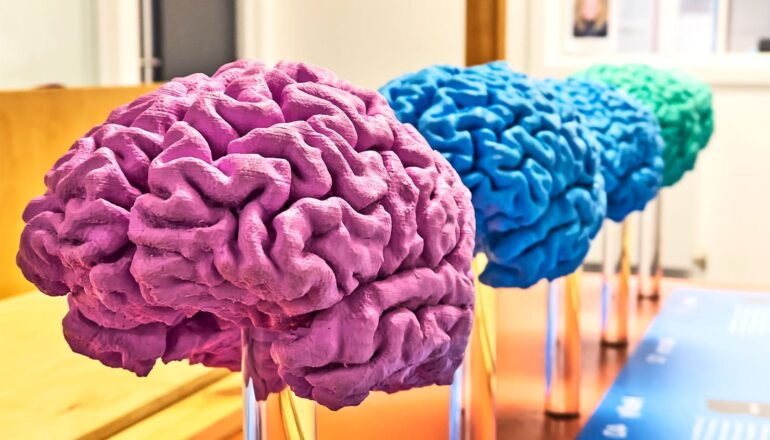
Research in mice finds that “forever chemicals” affect the developing male brain.
“Forever chemicals” or per- and polyfluoroalkyl substances (PFAS) have been widely used in consumer and industrial products for the better part of a century, but do not break down in the natural environment.
One PFAS, perfluorohexanoic acid or PFHxA, is made up of a shorter chain of molecules and is thought to have less of an impact on human health.
The new research from the Del Monte Institute for Neuroscience at the University of Rochester suggests otherwise, finding that early life exposure to PFHxA may increase anxiety-related behaviors and memory deficits in male mice.
“Although these effects were mild, finding behavioral effects only in males was reminiscent of the many neurodevelopmental disorders that are male-biased,” says Ania Majewska, professor of neuroscience and senior author of the study in the European Journal of Neuroscience.
Research has shown males are more often diagnosed with neurodevelopmental disorders such as autism and ADHD. “This finding suggests that the male brain might be more vulnerable to environmental insults during neurodevelopment.”
The researchers exposed mice to PFHxA through a mealworm treat given to the mother during gestation and lactation. They found that the male mice exposed to higher doses of PFHxA in utero and through the mother’s breastmilk showed mild developmental changes, including a decrease in activity levels, increased anxiety-like behaviors, and memory deficits. They did not find any behavioral effects in females that were exposed to PFHxA in the same way.
“Finding that developmental exposure to PFHxA has long-term behavioral consequences in a mammalian model is concerning when considering short-chain PFAS are thought to be safer alternatives to the legacy PFAS that have been phased-out of production,” says Elizabeth Plunk, an alumna of the toxicology graduate program at the University of Rochester School of Medicine and Dentistry and first author of the study.
“Understanding the impacts of PFHxA on the developing brain is critical when proposing regulations around this chemical. Hopefully, this is the first of many studies evaluating the neurotoxicity of PFHxA.”
The researchers followed these mice into adulthood and found that in the male mice PFHxA exposure affects behavior long after exposure stops, suggesting that PFHxA exposure could have effects on the developing brain that have long-term consequences.
“This work points to the need for more research in short-chain PFAS. To our knowledge, PFHxA has not been evaluated for developmental neurobehavioral toxicity in a rodent model,” says Majewska.
“Future studies should evaluate the cellular and molecular effects of PFHxA, including cell-type specific effects, in regions associated with motor, emotional/fear, and memory domains to elucidate mechanistic underpinnings.”
Despite its shorter chain, PFHxA has been found to be persistent in water and was restricted by the European Union in 2024. This follows years of restrictions on longer chain PFAS.
Last year, the Environmental Protection Agency set its first-ever national drinking water standard for PFAS, which will reduce PFAS exposure for millions of people.
PFAS are man-made chemicals that have the unique ability to repel stains, oil, and water have been found in food, water, animals, and people. They are linked to a range of health issues, including developmental issues in babies and kidney cancer.
Additional authors are from the University of Rochester Medical Center, the University of Michigan, and Brown University.
Support for the research came from the National Institutes of Health, the University of Rochester Intellectual and Developmental Disabilities Research Center, and the University of Rochester Environmental Health Sciences Center.
Source: University of Rochester
The post ‘Forever chemicals’ affect developing male brains appeared first on Futurity.
-
AI ‘detective’ sheds light on how people make decisions

A new study deploys small neural networks to clarify how and why people make the decisions they make.
Researchers have long been interested in how humans and animals make decisions by focusing on trial-and-error behavior informed by recent information.
However, the conventional frameworks for understanding these behaviors may overlook certain realities of decision-making because they assume we make the best decisions after taking into account our past experiences.
The new study deploys AI in innovative ways to better understand this process.
By using tiny artificial neural networks, the researchers’ work illuminates in detail what drives an individual’s actual choices—regardless of whether those choices are optimal or not.
“Instead of assuming how brains should learn in optimizing our decisions, we developed an alternative approach to discover how individual brains actually learn to make decisions,” explains Marcelo Mattar, an assistant professor in New York University’s psychology department and one of the authors of the paper in the journal Nature.
“This approach functions like a detective, uncovering how decisions are actually made by animals and humans. By using tiny neural networks—small enough to be understood but powerful enough to capture complex behavior—we’ve discovered decision-making strategies that scientists have overlooked for decades.”
The study’s authors note that small neural networks—simplified versions of the neural networks typically used in commercial AI applications—can predict the choices of animals much better than classical cognitive models, which assume optimal behavior, because of their ability to illuminate suboptimal behavioral patterns. In laboratory tasks, these predictions are also as good as those made by larger neural networks, such as those powering commercial AI applications.
“An advantage of using very small networks is that they enable us to deploy mathematical tools to easily interpret the reasons, or mechanisms, behind an individual’s choices, which would be more difficult if we had used large neural networks such as the ones used in most AI applications,” adds author Ji-An Li, a doctoral student in the Neurosciences Graduate Program at the University of California, San Diego.
“Large neural networks used in AI are very good at predicting things,” says author Marcus Benna, an assistant professor of neurobiology at UC San Diego’s School of Biological Sciences.
“For example, they can predict which movie you would like to watch next. However, it is very challenging to describe succinctly what strategies these complex machine learning models employ to make their predictions —such as why they think you will like one movie more than another one. By training the simplest versions of these AI models to predict animals’ choices and analyzing their dynamics using methods from physics, we can shed light on their inner workings in more easily understandable terms.”
Understanding how animals and humans learn from experience to make decisions is not only a primary goal in the sciences, but, more broadly, useful in the realms of business, government, and technology. However, existing models of this process, because they are aimed at depicting optimal decision-making, often fail to capture realistic behavior.
Overall, the model described in the new Nature study matched the decision-making processes of humans, non-human primates, and laboratory rats. Notably, the model predicted decisions that were suboptimal, thereby better reflecting the “real-world” nature of decision-making—and in contrast to assumptions of traditional models, which are focused on explaining optimal decision-making.
Moreover, the model was able to predict decision-making at the individual level, revealing how each participant deploys different strategies in reaching their decisions.
“Just as studying individual differences in physical characteristics has revolutionized medicine, understanding individual differences in decision-making strategies could transform our approach to mental health and cognitive function,” concludes Mattar.
Support for the research came from the National Science Foundation, the Kavli Institute for Brain and Mind, the University of California Office of the President, and UC San Diego’s California Institute for Telecommunications and Information Technology/Qualcomm Institute.
Source: NYU
The post AI ‘detective’ sheds light on how people make decisions appeared first on Futurity.
-
How Trump's budget cuts could affect 2 iconic space telescopes: Hubble and James Webb
At the 246th American Astronomical Society meeting in Alaska last month, scientists discussed how Trump’s budget cuts could affect operations for the Hubble Space Telescope and JWST.