Nature, Published online: 23 June 2025; doi:10.1038/s41586-025-09289-0
Gating and noelin clustering of native Ca2+-permeable AMPA receptors
Nature, Published online: 23 June 2025; doi:10.1038/s41586-025-09289-0
Gating and noelin clustering of native Ca2+-permeable AMPA receptors
Nature, Published online: 23 June 2025; doi:10.1038/d41586-025-01992-2
Nuclear policy specialist David Albright told Nature how his organization is monitoring for damage to nuclear sites following US and Israeli strikes.

New evidence from brain imaging research shows that “aha! moments” aren’t just satisfying — they actually reshape how your brain represents information, and help sear it into memory.
The work has implications for education, suggesting that fostering “eureka moments” could help make learning last beyond the classroom.
If you have an aha experience when solving something, “you’re actually more likely to remember the solution,” says first author Maxi Becker, a postdoctoral fellow at Humboldt University in Berlin.
In the study, the researchers used a technique called functional magnetic resonance imaging (fMRI) to record people’s brain activity while they tried to solve visual brain teasers. The puzzles required them to “fill in the blanks” of a series of two-tone images with minimal detail, using their perception to complete the picture and identify a real-world object.
Such hidden picture puzzles serve as small-scale proxies for bigger eureka moments.
“It’s just a little discovery that you are making, but it produces the same type of characteristics that exist in more important insight events,” says senior author Roberto Cabeza, a professor of psychology and neuroscience at Duke University.
For each puzzle the participants thought they solved, the researchers asked whether the solution just popped into their awareness in a flash of sudden insight, or whether they worked it out in a more deliberate and methodical way, and how certain they were of their answer.
The results were striking.
Participants tended to recall solutions that came to them in a flash of insight far better than ones they arrived at without this sense of epiphany. Furthermore, the more conviction a person felt about their insight at the time, the more likely they were to remember it five days later when the researchers asked them again.
“If you have an ‘aha! moment’ while learning something, it almost doubles your memory,” says Cabeza, who has been studying memory for 30 years. “There are few memory effects that are as powerful as this.”
A number of changes in the brain may cause people to have better memory for “aha! moments,” the researchers found.
They discovered that flashes of insight trigger a burst of activity in the brain’s hippocampus, a cashew-shaped structure buried deep in the temporal lobe that plays a major role in learning and memory. The more powerful the insight, the greater the boost.
They also found that the activation patterns across the participants’ neurons changed once they spotted the hidden object and saw the image in a new light—particularly in certain parts of the brain’s ventral occipito-temporal cortex, the region responsible for recognizing visual patterns. The stronger the epiphany, the greater the change in those areas.
“During these moments of insight, the brain reorganizes how it sees the image,” says Becker, who did the work in the Cabeza lab.
Lastly, stronger “aha!” experiences were associated with greater connectivity between these different brain regions. “The different regions communicate with each other more efficiently,” Cabeza says.
The current study looked at brain activity at two specific moments in time, before and after the eureka moment when the lightbulb appeared. As a next step, the researchers plan to look more closely at what happens during the few seconds in between that allows people to finally see the answer.
“Insight is key for creativity,” Cabeza says. In addition to shedding light on how the brain comes up with creative solutions, the findings also lend support for inquiry-based learning in the classroom.
“Learning environments that encourage insight could boost long-term memory and understanding,” the researchers wrote.
Researchers used fMRI to map the brain activity of 31 participants while they solved hidden picture puzzles. The more intense their “aha! moment,” the more blood flow there was to those parts of the brain.
The research appears in Nature Communications.
Researchers from Humboldt and Hamburg Universities in Germany also contributed to the work.
Funding for this research came from the Einstein Foundation Berlin and the Sonophilia Foundation.
Source: Duke University
The post ‘Aha! moments’ help you remember what you learn appeared first on Futurity.

Socioeconomic factors may be a driving force behind the emergence and spread of animal-borne disease outbreaks, according to new research.
The study found that outbreaks of bacterial diseases, such as tuberculosis, plague, and salmonella, were caused by things like poverty, international travel, and poor access to health care, among others.
Meanwhile, environmental factors like changing weather patterns, natural disasters, close contact with livestock or wildlife can spark viral disease outbreaks. But it is often socioeconomic factors that help these diseases spread widely.
“It’s important to think about what conditions we are creating that might lead to disease outbreaks in the future,” says Payton Phillips, lead author of the study and a postdoctoral researcher at the University of Georgia’s Savannah River Ecology Laboratory.
“It’s our behavior, our medical systems, our travel, our economic conditions that play a role in disease outbreaks.
“Knowing that these factors are so important, we need to push for better sanitation, improved water quality, and more funding for medical interventions to keep outbreaks under control.”
The researchers analyzed data from more than 300 global disease outbreaks, including the 100 largest outbreaks between 1977 and 2017. The scientists examined 48 different drivers of disease outbreaks, divided into socioeconomic or environmental categories.
Some of the socioeconomic factors included antibiotic use, contaminated water and food, sewage management, and public health infrastructure. Environmental factors included climate change; the spread of disease vectors, such as mosquitoes; and the introduction of invasive species, among others.
“If we know there are socioeconomic issues, like if water sanitation is a problem for a local area, then we can try to address it ahead of an outbreak,” Phillips says. “We can and should be more proactive.”
More than six out of every 10 infectious diseases in people originate in animal populations, according to the Centers for Disease Control and Prevention. And 75% of emerging diseases come from animals.
People originally become infected with these diseases through interactions with animals. This can happen directly, such as touching a sick animal or being bitten by one, or indirectly by consuming contaminated water or food, like raw milk or undercooked meat.
“Many viruses are naturally found in certain animals,” Phillips says. “But it’s our behavior that allows them to spread.”
For example, scientists believe the viruses that cause Ebola originated in bats. Once an Ebola outbreak spills over into humans, the disease begins rapidly spreading from person to person.
Not every disease is capable of human-to-human spread. Avian influenza, for instance, appears to not easily spread from one infected person to another. But as more species are infected with a virus or bacteria, the threat of evolution—and the ability to spread between people—rises.
The study appears in Microorganisms.
Additional coauthors are from the University of Georgia and Oklahoma State University.
Source: University of Georgia
The post Poverty may kickstart the next pandemic appeared first on Futurity.

A natural alternative to pesticides may be hiding in a misunderstood plant compound—but it could come at an environmental cost.
For years, scientists knew little about isoprene, a natural chemical produced by plants. New research 40 years in the making now sheds light on how this natural chemical can repel insects—and how some plants that don’t normally make isoprene could activate production in times of stress.
Tom Sharkey, a professor in the Michigan State University-Department of Energy Plant Research Laboratory, the MSU Plant Resilience Institute and biochemistry and molecular biology department, has studied isoprene for much of his career.
Now, his lab has published findings that could provide a path for engineering plants that are more resilient to environmental change and pest outbreaks.
The team’s paper in Science Advances uncovers a hormonal response triggered by isoprene that makes insects steer clear of those plants. Insects that munched on isoprene-treated leaves got a stomachache, thanks to indigestible proteins that kick in when the compound is present. Those proteins also stunt the growth of worms that dare to keep eating them.
Another paper in the Proceedings of the National Academy of Sciences reveals that soybeans produce isoprene when their leaves are wounded. This discovery was particularly surprising since researchers previously believed modern crops didn’t produce isoprene. This ability could make crops more resilient to heat and pests.
But that benefit could come at a cost. Isoprene is a hydrocarbon that worsens air pollution, especially in areas that already have poor air quality. If more crop plants were engineered to release isoprene, that could further damage the Earth’s atmosphere. The research also has implications for how soybeans may affect air pollution.
“That’s one of the questions that’s most important to come out of this research,” Sharkey says.
“Should we add isoprene to crop plants so that they’re protected against insects and put up with their effect on the ozone? Or should we genetically engineer plants to turn off the isoprene synthase as much as we can to improve the atmosphere?”
Isoprene is one of the highest emitted hydrocarbons on Earth, second only to methane emissions from human activity. These organic compounds interact with sunlight and nitrogen oxide from coal-burning facilities and vehicle emissions, creating a toxic brew of ozone, aerosols, and other harmful byproducts.
Not all plants produce isoprene, however, and the ones that do tend to make more in hot weather. It’s mostly found in oak and poplar trees, but unlike similar molecules in pine and eucalyptus trees, isoprene doesn’t have a scent.
“Everyone understands what it smells like when you walk through a pine forest,” Sharkey says. “In an oak grove, which has more hydrocarbons because it makes so much isoprene, you just don’t notice it.”
Isoprene-producing plants pump out more of the compound on hot summer days. Scientists believe this helps stabilize plants and neutralize stress reactions. Isoprene-emitting plants are also thought to be pest-resistant, though until now, there had been little study of why. But as plants make more isoprene, they sacrifice some of their growth potential. When plants make isoprene, they divert carbon away from growth and storage and invest instead in their defense. Some believe this is why many plants folded under evolutionary pressure to get rid of the isoprene synthase.
Sharkey first became interested in isoprene as a graduate student. Based on a simple cost-benefit analysis, he knew there had to be a benefit to keeping the isoprene-producing gene around. He’s devoted much of his career to finding out what that is.
A whitefly infestation in an MSU greenhouse was the first test of how isoprene protects plants from insects. Sharkey’s lab grew two types of tobacco plants in the greenhouse: one genetically engineered to emit isoprene and the other a non-emitting plant. It was obvious even to a casual observer that whiteflies preferred the non-emitting plant.
The researchers tested their theory further by watching tobacco hornworms. The worms voraciously attacked the non-emitting leaves while leaving the others alone. After 10 days, the hornworms that only ate isoprene-emitting leaves were significantly smaller than those that snacked on the untreated leaves.
The isoprene itself isn’t what repels the insects. Instead, isoprene triggers an increase in jasmonic acid, a molecule that reduces an insect’s ability to digest proteins and slows their growth.
“The defense was not the isoprene itself, but the consequence of what isoprene did to the plant,” Sharkey says.
Until recently, scientists thought crop plants like soybeans and corn didn’t produce isoprene because their ability to do so was lost through evolution. Then, in 2022, researchers discovered two intact isoprene synthase, or ISPS, genes in soybeans. Sharkey decided to experiment whether environmental stresses could activate the dormant ISPS gene.
To test this question, they placed clamps on soybean leaves and damaged them. The leaves responded with a small burst of isoprene. Sharkey says this means soybeans have their cake and eat it too—they’re able to make isoprene when needed, but they can shut off the process under normal conditions.
More research is needed to determine how this ability protects soybeans from stressors, as well as whether isoprene production is triggered by extreme heat. Sharkey is concerned by the potential impact soybeans might have on the atmosphere if they’re churning out isoprene during increasingly frequent hot spells.
“What drives me most is that I think we should understand these big things,” Sharkey says. “Isoprene is the single biggest source of hydrocarbon in the atmosphere. We should understand it.”
The research had support from the National Science Foundation, the MSU Plant Resilience Institute, and MSU AgBioResearch.
Source: Michigan State University
The post Some plants create their own pesticide, but there’s a downside appeared first on Futurity.
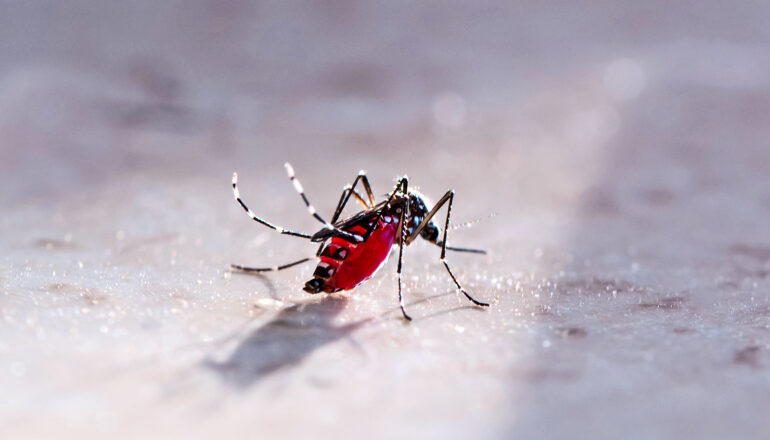
Using screwworms, mosquitoes, and invasive rodents as case studies, a team of researchers argues that deliberate full extinction of harmful species is acceptable, but only rarely.
Under what conditions would it be right—or is it never acceptable—to eliminate a harmful species from our planet? That’s what researchers, including Clare Palmer, a professor of philosophy from Texas A&M University, explore in a study in Science.
In the study, researchers examine the controversial idea of using genetic engineering for local and full species extinction as a conservation strategy. They conducted case studies on three species: the New World screwworm (Cochliomyia hominivorax); the Anopheles gambiae mosquito, a vector for malaria; and invasive rodent species like the house mouse and black rat.
“Together, we argue, these cases suggest that deliberate full extinction might occasionally be acceptable, but only extremely rarely,” the team states.
A screwworm is a parasitic fly that infests warm-blooded animals, causing severe suffering and economic loss, particularly in livestock. Mosquitos carrying malaria are extremely dangerous for humans of all ages. Nearly 290 million people around the world are infected annually, and 400,000 of them will die of the disease. And invasive house mice on islands are eating seabirds alive, driving their populations toward extinction.
“These cases highlight the tension between the intrinsic value of a species and the benefits of eradicating a harmful pest,” Palmer says.
“While the suffering caused by these species is undeniable, the ethical implications of deliberately driving a species to extinction are profound. We must carefully weigh the ecological and moral implications of such actions.”
The researchers examined the use of several genetic methods to eradicate harmful species:
The researchers conclude that while deliberate extinction through genome modification is justified in rare and compelling cases, it should be approached with caution. The study calls for robust ethical safeguards and inclusive decision-making frameworks to guide the use of these powerful technologies.
They suggest the following conditions under which eradication could be considered:
Palmer says she hopes the study will influence public policy and conservation practices.
“Our goal is to foster a more nuanced understanding of the ethical dimensions of genome modification,” she says. “We need to balance the potential benefits with the moral responsibilities we have towards all species.”
A grant from the National Science Foundation funded this research.
Source: Texas A&M University
The post Is it ethical to eradicate certain harmful species? appeared first on Futurity.

In children with undernutrition, increasing weight in a child’s first decade of life can lead to significantly taller adults—with no increase in the risk of obesity or high blood pressure later in life, according to a new study.
The findings in JAMA Network Open are key for children facing undernutrition, offering the opportunity to positively shape their long-term health and development, especially in undernourished settings.
“Previous research suggested that interventions to reduce undernutrition in children after age 2 might not be beneficial. The concern was that weight gain in childhood might lead to higher blood pressure and obesity in adulthood,” says lead author Beverly Strassmann, a University of Michigan professor of anthropology and faculty associate at the Institute for Social Research.
“This previous recommendation neglected to consider the importance of weight gain for helping children to achieve their full height potential as adults. Taller women are less likely to die in childbirth, so it’s important to consider the association between childhood nutrition and adult height.”
The study investigated whether weight gain in childhood would positively affect adult height and if it would also be linked to an elevated risk of adult obesity and high blood pressure.
“Our findings are significant because they show that improved growth from age 1 to 10 years led to taller stature in adulthood and the increased risk for obesity and hypertension was negligible,” Strassmann says.
Her research team followed 1,348 participants with repeated follow-up visits for 21 years in central Mali. The findings indicate that weight gain between ages 1 and 10 was significantly associated with gains in adult stature for both females and males by age 21.
According to Strassmann, the research employed a longitudinal design, allowing them to follow children from an average age of 1.6 years to 21 years, which is “rare for low-income countries in Africa.”
“Our study is unique in that we considered not only the risks of childhood weight gain for higher blood pressure and BMI in adulthood but also the benefits for increased adult stature,” she says.
“It is hard to overestimate the health benefits of being taller in a population that is impacted by undernutrition. It is known that taller women are less likely to die in childbirth, for example.
The research went against the widespread view that nutritional interventions for children should stop at age 2.
“Not all children are reached in the first 1,000 days of life, which is the time from conception to age 2 years,” Strassmann says.
The findings show that in undernourished settings, weight gain after age 2 can support growth in stature and lead to taller adults who are not obese or hypertensive. Policy for undernourished settings needs to take into account the importance of reducing undernutrition throughout childhood, Strassman says.
Source: University of Michigan
The post Early-life weight gain boosts adult height but not obesity risk appeared first on Futurity.

Although it’s a time to relax and enjoy leisure activities, summer can also be detrimental for school-age children.
Studies show that many students lose up to 30% of their knowledge during these months, especially in math and reading.
Chakeia Andrews, an assistant professor of professional practice at the University of Miami School of Education and Human Development who taught elementary school and was a former reading coach, says that “even within my practice, I have had evidence of students coming back to school in August and noticed that there is a summer learning loss.”
Andrews notes that in lower income areas some students have a greater loss of knowledge than the 30% average due to the lack of enrichment summer activities to reinforce and continue learning.
An effective way to prepare for the summer is for parents to check with their child’s teacher to see how their child is performing academically.
“At the end of the school year, the students participate in the FAST assessment, and those tests provide data that can inform parents in which academic areas they should focus on during the summer months so that children are ready and prepared when they return to school in August,” she says.
There are many ways that parents can help their children to retain their knowledge during the summer months. Having a daily reading routine is very helpful, particularly for elementary school students, she says.
Studies show that parents who read to or with their children help them to improve their vocabulary, reading comprehension, and awareness of phonics. In addition, it reinforces the bond between parent and child.
Andrews reads with her 5-year-old daughter, Hazel, every day. In addition, Hazel keeps a double-response journal. When Hazel reads a book, she writes down a comment on the story and Andrews does as well. Parent reinforcement is a great incentive for children to keep on learning, experts says.
Using educational games and websites to reinforce reading and phonics skills is also very beneficial, she says. ABCmouse.com and PBS KIDS websites are two good ones.
Here are some additional tips to help students during the summer:
Source: University of Miami
The post How to keep your kids from losing knowledge over the summer appeared first on Futurity.
A SpaceX Falcon 9 rocket carrying 27 Starlink satellites was launched from Cape Canaveral Space Force Station in Florida on Monday, June 23, 2025.
Breathing in moon dust can still give you what one astronaut called “lunar hay fever.”