Briefing

  • Kuroshio Intrusions into Luzon Strait Increase Chlorophyll

    Image of a Synechococcus elongatus
    Editors’ Highlights are summaries of recent papers by AGU’s journal editors.
    Source: Journal of Geophysical Research: Oceans

    The surface waters of warm western boundary currents are poor in nutrients. Therefore, intrusions of these nutrient-depleted water into the region are considered to reduce biological production. Although warm waters of the Kuroshio, one of the western boundary currents, often intrude into the South China Sea through the Luzon Strait, their biogeochemical consequences are not well understood.

    Li et al. [2025] use data from 20 cruises conducted in the South China Sea between 2004 and 2015, reveal that the Kuroshio intrusion counterintuitively increases the chlorophyll pigments that are contributed by small phytoplankton called picophytoplankton and nanophytoplankton. Previous studies have pointed out that global warming has weakened the Kuroshio intrusion into the South China Sea. Therefore, this study raises concerns that global warming would cause a decrease in primary production in the future.

    Schematics of the study showing surface chlorophyll concentration, which is proportional to phytoplankton biomass and abundant in the mixed water property between South China Sea (KI=0%) western Pacific (KI=100%), is intensified with strong Kuroshio intrusion (blue curve) in the South China Sea. Credit: Li et al. [2025], Figure 9

    Citation: Li, W., Shang, Y., Li, C., Xu, C., Laws, E. A., Liu, X., & Huang, B. (2025). A stronger Kuroshio intrusion leads to higher chlorophyll a concentration in the northern South China Sea. Journal of Geophysical Research: Oceans, 130, e2024JC021389. https://doi.org/10.1029/2024JC021389

    —Takeyoshi Nagai, Editor, JGR: Oceans

    Text © 2025. The authors. CC BY-NC-ND 3.0
    Except where otherwise noted, images are subject to copyright. Any reuse without express permission from the copyright owner is prohibited.
  • First view of the Sun's south pole filmed by spacecraft

    Never before seen pictures will help scientists learn how the Sun’s activity changes from stormy to quiet periods

  • Polar Bear Cam: Live Events

    All live events for the Polar Bear Cam will take place on the Tundra Connections Channel.

    Tuesday, October 19th, 1:00pm Central

    Polar Bears on the Tundra: Cam Kick-off

    It’s that time of year again! Polar bears are gearing up for the sea ice to return soon, gathering along the shores of Hudson Bay in anticipation of eating soon. In the meantime, we’ll be watching and live-streaming their every move while letting you know what we’re seeing! Join us as we kick off the season with familiar faces and answer all your questions about what this season holds!

    Thursday, October 28th, 11:00am Central

    Arctic Innovations

    The Arctic is known to be a harsh environment, but we choose to work there anyway! We are going to talk about some of our favourite new technologies and innovations allowing us to learn more about polar bears and help us keep them in the wild.

    Thursday, November 4th, 12:00pm Central 

    Polar Bear Tracking: Past, Present, and Future

    From bulky radio collars in the 80s to stick on tags smaller than a deck of cards in 2020, polar bear tracking has come a long way! Join us to discuss the difficulty, evolution, and importance of tracking an animal that lives on the Arctic sea ice for most of its life!

    Friday, November 12th, 1:00pm Central

    Farewell to the Tundra

    It’s been another amazing season! We will discuss our favorite (and fan favourite!) highlights from this bear season and look at what’s next for the polar bears of Western Hudson Bay.

  • Africam Shows Schedule: November 2021

    The Africam Show (Tuesdays at 7 a.m. PT / 10 a.m. ET) – A special live Q&A session to catch up on the best weekly Africam moments. Viewers will have the opportunity to ask Ranger Russel Gerber questions on the Africam Shows Channel or on our YouTube chat roll.

    Africam4Good Show (Thursdays at 9 a.m. PT / 12 p.m. ET) – A weekly conversation about the conservation of African wildlife, and an overview of great moments from the live cams. Watch these special broadcasts on the Africam Shows Channel or on our YouTube channel.

    The Africam Show: (2nd November)

    Russell takes us on a virtual safari with the live cameras and updates us with highlights of animal characters.

    Africam4Good Show: Predator Conservation (4th November)

    Russell chats with Thandiwe Mweetwa from the Zambian Carnivore Project about her conservation efforts in Zambia and what it’s like having a career in conservation.

    The Africam Show: (9th November)

    Russell takes us on a virtual safari with the live cameras and updates us with highlights of animal characters.

    Africam4Good: Ground Hornbill Project (11th November)

    Russell chats to Kyle-Mark Middleton about the endangered Southern ground hornbill and their current efforts to protect the bird’s future.

    The Africam Show: (16th November)

    Russell takes us on a virtual safari with the live cameras and updates us with highlights of animal characters.

    Africam4Good: Tembe Elephant Park – (18th November)

    Russell chats with Ernest Robbertse from Tembe Elephant Park about his water project for the Tembe community and to chat about the history of Tembe.

    The Africam Show: (23rd November)

    Russell takes us on a virtual safari with the live cameras and updates us with highlights of animal characters.

    Africam4Good: Kalahari Wild Dog Project (25th November)

    Russell chats to Nadja le Roux from the Kalahari Wild Dog Project about her conservation work with the endangered painted dog.

    The Africam Show: (30th November)

    Russell takes us on a virtual safari with the live cameras and updates us with highlights of animal characters.

  • Siblicide: An Inextricable Behavior in Birds?

    by Mike Fitz

    Watching unfiltered footage of wild animals on explore.org means that we’ll inevitably witness nature’s harsh realities. Bears strip the skin off of living salmon. Lions subdue zebras. A python snares an unsuspecting bird from its perch. Falcons fight for nesting territories. Ravens pillage an unoccupied eagle nest. Although these events can be difficult to watch, the reasons for them are typically clear. Hunger and reproduction are powerful motivators. Other behaviors and situations, though, challenge our best available science as well as our sensibilities of right and wrong.

    A bird nest is a dichotomous place of nurturing and conflict. Parents care for their vulnerable young, while chicks compete for food and space. The competition in a bird nest can manifest in ways far beyond the times when my brother, sister, and I fought over the last cookie. 

    An extreme form of sibling rivalry at a bird nest may lead to siblicide. Also called Cainism after the biblical story of Cain and Abel, siblicide occurs when a nestling’s behavior leads to the death of one or more of its siblings through starvation, physical injury, or eviction from the nest. While siblicide is not common among birds overall, it does happen in a wide variety of birds. It’s documented in the osprey, shoebill, southern ground hornbill, white-bellied swiftlet, blue-throated bee-eater, and blue-footed booby as well as certain species of cranes, eagles, egrets, hawks, herons, guillemots, gulls, owls, pelicans, penguins, and vultures. 

    Siblicide in birds often occurs as soon as a larger or more aggressive nestling gains the size, strength, and weaponry (such as a sharp beak) to cause significant harm to its younger and smaller nest mate(s). On explore.org we’ll likely witness it on the webcam that features the African black (Verreaux’s) eagle nest in South Africa, and it is possible that we could see it at the cams of great blue heron, osprey, black guillemont, and bald eagle nests in North America. But, there are differences in how it occurs. African black eagles experience obligate siblicide: two eggs are laid, they hatch at different times, and the older chick always kills its younger sibling. In contrast, siblicide is facultative in herons and osprey: it is circumstantial and doesn’t always occur. 

    Distinguishing the nuances of obligate and facultative siblicide doesn’t make it any easier to witness, of course. I wonder if this behavior is so difficult to watch, in part, because it is so difficult to explain. 

    Many organisms including humans make overt efforts to help ensure the survival of related individuals. This trait isn’t universal, though. At best, many more organisms behave indifferently to their siblings’ survival. Others take a more aggressive stance. Certain species of sharks attack and eat their siblings in the womb. 

    If siblicide was maladaptive, if it failed to provide survival benefits in the near or long term, especially if an alternate life history strategy such as cooperation among nestlings led to higher survival and reproductive rates, then those with the siblicidal trait might eventually have their genes winnowed from the population or species. Yet since siblicide persists, then scientists—or at least my interpretation of their conclusions—have operated under the assumption that siblicide, especially obligate variation, provides some sort of benefit that leads to reproductive success for the individuals that practice it.

    During the last few decades, scientists have hypothesized many potential explanations for siblicide in birds. Maybe the only thing we know for sure is that there are certain factors that make it more likely to happen, although none appear to be universal. Among birds, siblicide is correlated with large body size at maturity, complex hunting and foraging behaviors, a protracted period of learning in early life, and a slow life history pace (that is, you live a long time and have a low reproductive rate). In addition, siblicidal bird species are more likely to have a long nestling period and effective weaponry at a young age such as a sharp bill. Regarding the nesting period, consider that American robins (a species with no documented siblicide) leave the nest about 14 days after hatching, while the African black eagle doesn’t fledge for 95 days or longer. The nests of many siblicidal species usually offer limited escape possibilities too. A mallard duckling spends relatively little time in its nest after hatching and its ability to move and feed independently allows it to easily avoid a pushy sibling, unlike a heron chick that remains in a nest high in a tree for weeks after hatching. Additionally, if the species practices asynchronous hatching, then the older, first-hatched chick has a head start on growth and those few days can make a tremendous difference. A mother Canada goose may lay many eggs, but she does not start incubating until the entire clutch is laid and all of her eggs hatch at about the same time. In contrast, a female African black eagle begins to incubate her first egg immediately even though she usually lays a second egg three or four days later. As a result, her first chick hatches several days before the second. When the second chick hatches, the older black eagle chick uses its strongly hooked beak to attack its younger, vulnerable sibling. In More than Kin, Less than Kind: The Evolution of Family Conflict, biologist Douglas Mock notes a case when an older African black eagle chick attacked its nest mate within a few hours of its sibling hatching. The younger chick died three days after hatching and weighed 18 grams less than when it hatched due to the repeated attacks and food monopolization from its older sibling. 

    Perhaps unsurprisingly, food availability and hunger play an important role, especially in species with facultative siblicide. If the parents deliver food in large parcels, then the older or stronger chicks may be able to monopolize the food to the detriment of their siblings. If the parents feed their chicks infrequently and food transfer between feedings is slow, then an older or stronger chick can also interfere with the feeding of its sibling.

    Competition for food can become more intense as chicks grow. But, sufficient food can also allow younger or smaller chicks with the fortitude and energy to withstand and survive the aggression of their nest mates. One study on great egrets found that the amount of food had little direct influence on fighting behavior between siblings, though it consistently influenced chick survival. When scientists provisioned a great egret nest in Texas with extra food they found that nest mates didn’t reduce their aggression toward each other, but more chicks to survive to fledge. 

    There may be other factors that influence siblicide as well. One idea, for example, posits that some chicks may be more vulnerable to parasites. These infestations might leave a chick in a weakened state where it cannot withstand the aggression of its nest mates.

    As species with facultative siblicide demonstrate, all nestlings can survive when circumstances allow. Parent birds are often great hunters and select their nesting territories well, which makes obligate siblicide perplexing. Food is not always in short supply for young (less than one week-old) African black eagle chicks. So if “Cain” is always going to kill “Abel,” then what’s the point of laying a second egg? Perhaps obligate siblicide evolved in anticipation of food shortages later in the nesting period or maybe there are other, stronger reasons. After all, natural selection operates on a continuum of scales.

    For a mother African black eagle the energetic cost of laying a second egg is relatively small, but the payout could be huge—at least in terms of reproductive success—if something happens to the first egg. In this way, a black eagle’s second egg might serve as an insurance premium of sorts. An independent analysis of one chick mortality study in African black eagles found that about one in five of the second-to-hatch chicks survived to fledge. In fact, “Abel” survived to fledge at the Black Eagle Project’s Roodekrans nest, where explore.org now has a webcam, in 2005 and 2006 after the first egg failed to hatch. Although the probability of the second egg surviving remains low, it still may offer just enough of a reproductive reward to ensure the effort of laying a second egg, even if sibling aggression will lead an older chick to kill its nest mate in most instances.

    I offer this information knowing that it won’t make siblicide any easier for many of us to witness. It is appropriate and natural to feel for animals and empathize with their struggles. Siblicide is often difficult if not disturbing to watch, so always remember that it is also okay to take a break from the cams or watch a camera that focuses mostly on scenery rather than wildlife when things get unpleasant.

    The diversity of survival strategies among wild animals, though, serves as a never-ending point of fascination for me and I hope you as well. I wasn’t always the best brother to my younger siblings when I was a kid, but I was vested in their welfare. So something like siblicide in birds seems so out of the ordinary to feel alien. However, rather than judging whether it is right or wrong, I see it as something different, something outside of human ethics, a behavior that has purpose for the animals that experience it. Although siblicide in certain species of birds seems to have evolved to benefit survival, it remains a behavior that provokes our discomfort and is difficult for science to reconcile.

  • Comment System Survey Results

    by Candice Rusch, Director of New Media at explore.org

    Thank you to everyone who participated in the survey and gave us feedback about what you want to see in a new comment system. In this blog post, I’ll lay out our goals and analyze the results. Before we begin, I want to offer two caveats. We are still in the planning phase of development. Things can, and likely will, change. The features outlined here may not be feasible. Or, we might need to release these features in phases. The primary goal of the survey was to help us understand what features to prioritize in development. This new system will be for the community and we need you to be a part of this process with us. The second caveat is that we removed feedback from the analysis that was specifically related to moderation policies. This survey was designed to help us understand how to better design a comment system. Moderation policy is a different conversation. Don’t worry, we did read your feedback, but if it was related to moderation then it is not reflected in this report.

    Explore.org’s Goals For a New Comment System

    Stability

    It is no secret that Disqus has been buggy. 21% of the free answer portion of the survey was people lamenting how buggy Disqus is as a system. Most of our feedback inbox is filled weekly with people who face issues with the Disqus comment system. Snapshots don’t post. Comments are inaccurately marked as spam. Actual spam floods the site. Comments disappear. Notifications don’t work. The list goes on. The reason we periodically create new comment boards is that Disqus gets even more buggy as a comment board fills up. 

    Our primary goal is a new comment system that is stable. To accomplish this, we will have an extensive beta-test. During this test, the new comment board will be placed on a handful of cameras. We will need you to help us test this system: find bugs, tell us where things didn’t function as anticipated. The more feedback the better. I cannot say that our new system will never have bugs, but instead of having to wait days and sometimes weeks for a resolution from Disqus, we will be able to address the issues ourselves. Having our own system also gives us the opportunity to be  transparent with you about fixes and their implementation. 

    Features That Fit Our Needs

    Disqus is a 3rd party system that we license. We don’t have any control over what features they release and when. This has caused some issues in the past. Most recently their “advanced moderation” feature catches legitimate comments in a spam filter, and we have no ability to opt-out. Even worse, we don’t have the ability to add features that would benefit our community. We feel that the recent tensions around the off-topic rule is a design problem, not a policy problem. This survey revealed that for every person who was sad about the off-topic rule enforcement, there was another person who was happy that the chats are focused on the cams. The community is split in half. We are trying to please two diametrically opposed groups with a system that doesn’t allow us to make any accommodations. Thankfully, you also gave us some great ideas about how to create a chat that can fit more casual conversation, while allowing for people to filter out conversation they don’t find relevant. Explore is unique. It became clear to us that to grow, we need to create something designed for our community. Your responses to the survey were a great help in understanding what you want!

    Security & Accessibility

    From the moment we started the discussion about what a self-hosted comment system would mean, security and accessibility were at the top of our team’s mind. Part of accomplishing these goals will be consulting with experts to audit the system. Security experts will look at our system and assess it for vulnerability. We will design the system with accessibility in mind from the start. During the beta test we will specifically ask for accessibility testers to reveal any issues there. Once the system is live, we will create guides to help people navigate the new comments.

    Survey Results


    Do you currently use a commenting account on explore.org?
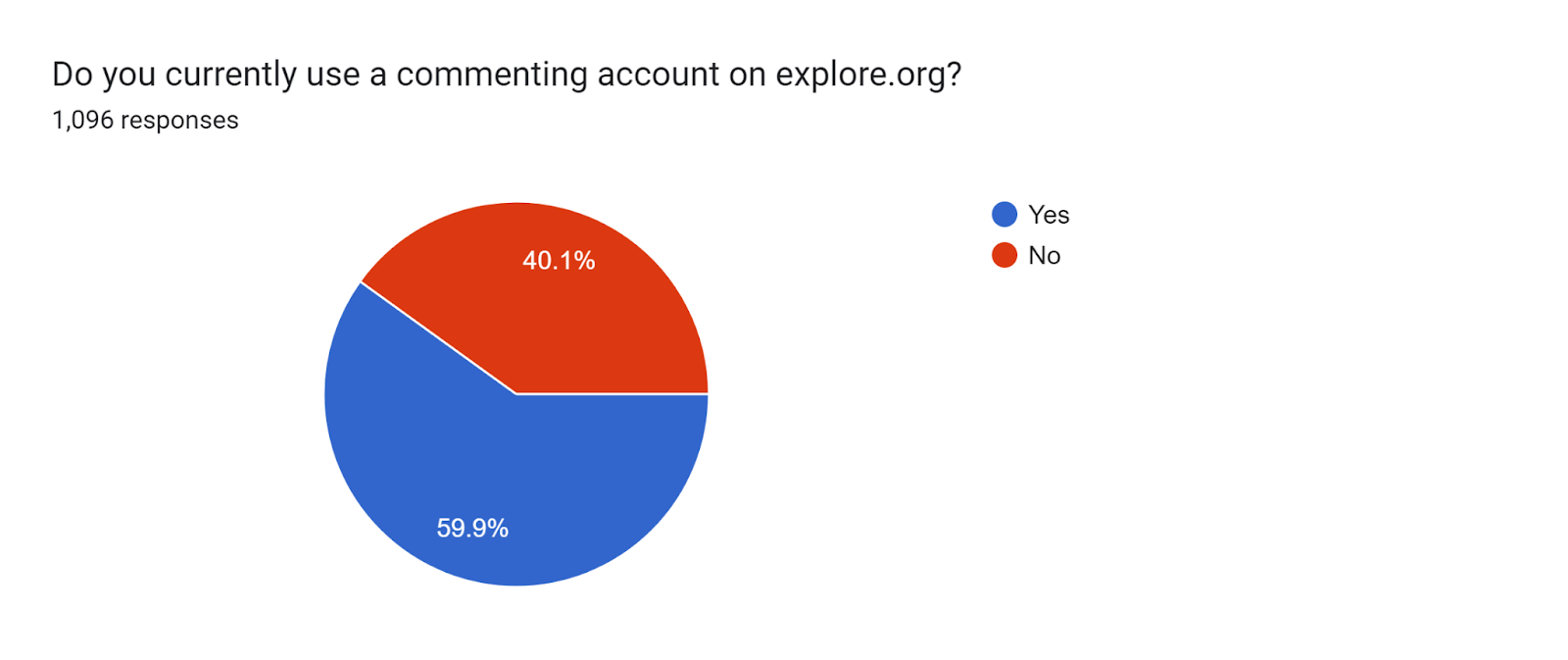
    It actually came as somewhat of a surprise to me that 40% of people who took the time to participate in the survey do not comment. The next question explains why people don’t comment. 

    If you said no, why don’t you use a commenting account?

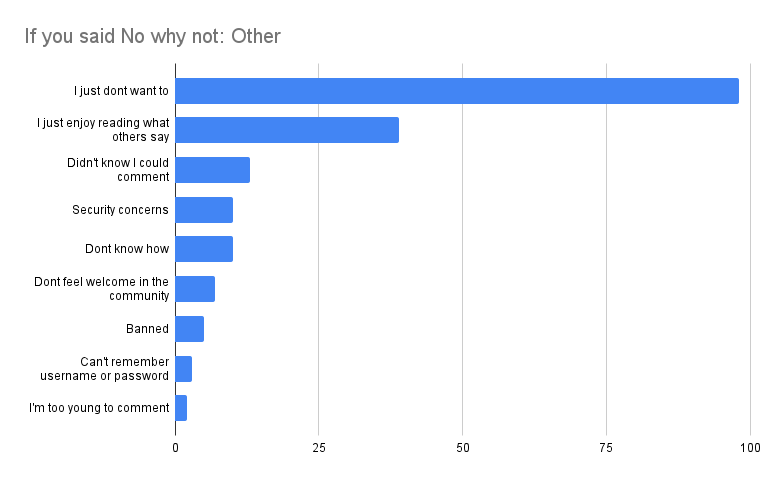
    To analyze the results of this question, I removed everyone who answered, “I do comment.” We accidentally made this a required question. Sorry about that. I then pulled out all the “other” answers and found a few common themes. 
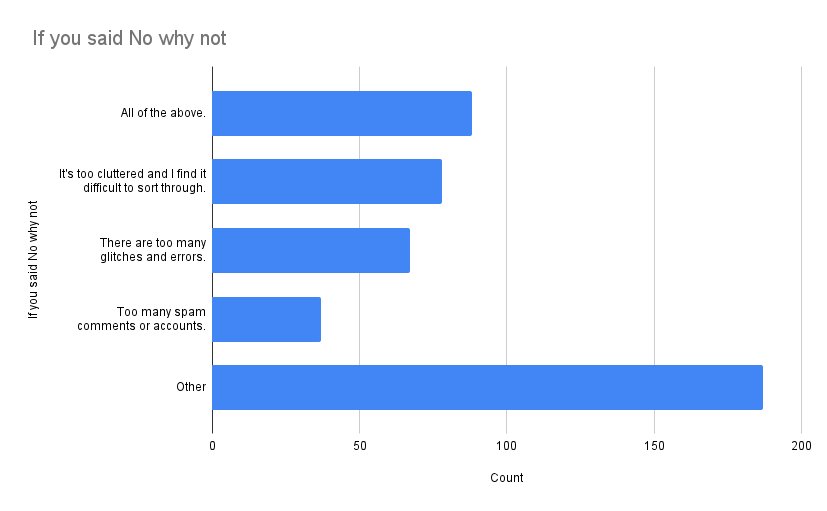
    By far the biggest reason people don’t comment is simply that they don’t want to, or are content reading the comments. The rest of this result confirms our suspicion that the bugs in Disqus are preventing people from being able to comment. This validates our goal of trying to build a stable commenting system first. The rest of the “other” responses have given us a lot to think about. For those of you who cited security concerns, we fully agree that the security of our users’ information is vital. I can confidently say that explore does not, and will never, sell our users’ information. It also looks like we could be better at educating our community about what is possible on the site. I was personally surprised that there were a number of people who didn’t know how to comment or didn’t know they even could comment on explore. 

    If you use a commenting account, what is your favorite feature?

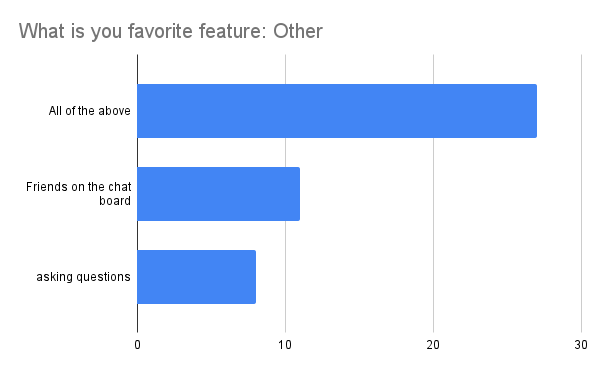
    To analyze this question, I did something similar to the previous question. I removed all the people who said that they don’t comment. I also broke out everyone who answered “other” and organized the answers around the themes that emerged. 
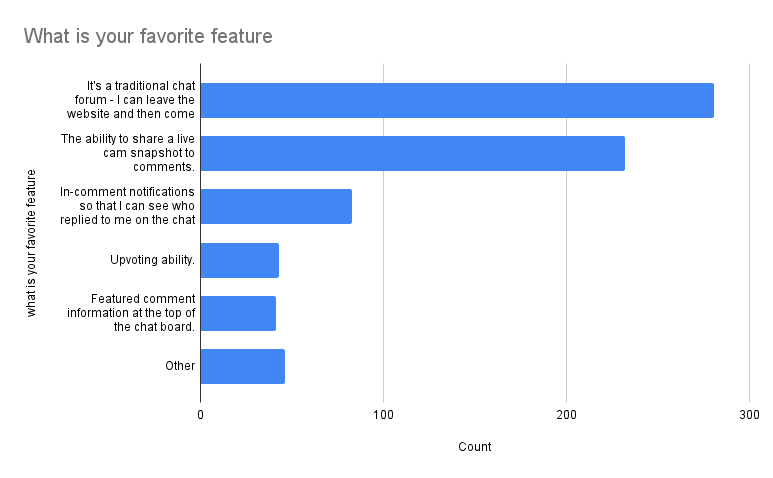
    We learned a couple things from this question. First, we confirmed our hypothesis that explore.org would not be a good fit for a scrolling chat like Youtube, twitch, and other live streaming platforms. The ability to leave and come back is essential to our community. We also learned that while many of you love the ability to post snapshots to comments, it has been deeply frustrating that that feature has been unstable at best. We agree. The reason it hasn’t worked recently is that Disqus’ system flags most attempts to post a snapshot to comments from explore as spam. If we host our own system, we will obviously not flag our own traffic as spam. This would be a very easy win for explore staff, moderators and fans alike. 

    If I were to change one thing about the commenting system, it would be

    This was one of the more insightful questions in the survey! Like the previous questions, I sorted the “other” responses into themes. There were quite a few pointing out specific bugs in the Disqus. I sorted the bug complaints into the label, “a stable system that works.”
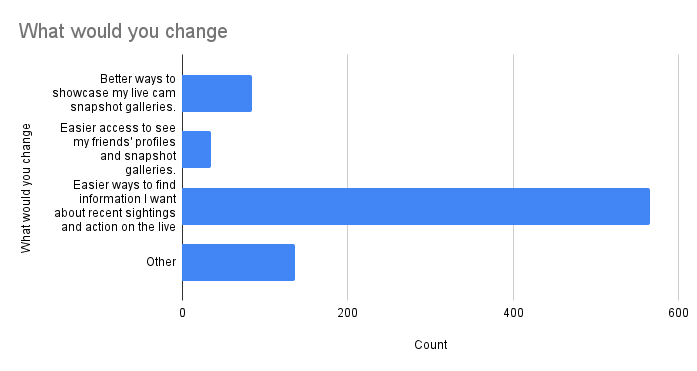
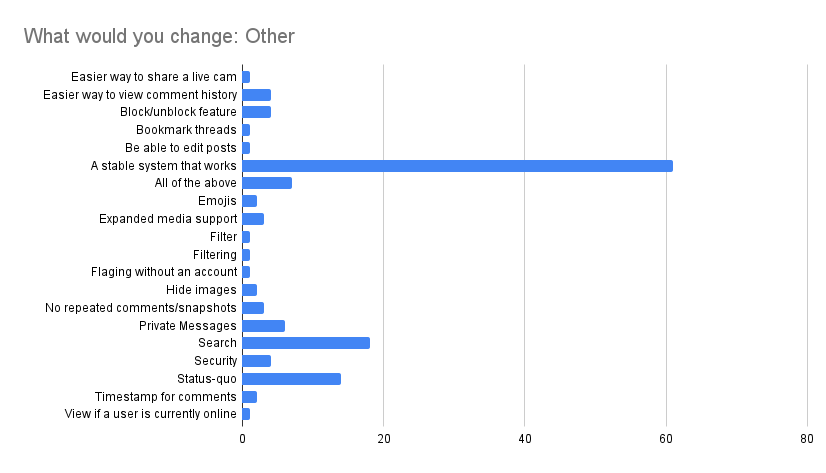
    By far most people wanted an easier way to find information they are interested in. The responses in the Other section came with very helpful suggestions. We are currently discussing search and filter options that would let people more easily find what they are looking for! Many of these suggested features are also found in the free-answer portion of the survey, so I will address more of them there. 

    There were a small minority of people who urged us not to move away from Disqus. While we are happy that you have not experienced issues, we hope that this blog helps you see the extensive problems most of the community face. We want to reassure people that our goal is to make the transition as simple and painless as possible. Ideally you will be able to comment on the new system with your existing explore.org account and won’t have to sign up for anything new. As much as possible, we aim to maintain any existing features that work, while improving their stability. Any additional features we add will be tested to make sure they add value to the community.

    “How Interested Are You” Questions

    These questions were meant to gauge the interest of the community on some features that the explore staff brainstormed in one of our planning meetings. While the primary goal is to create a more stable system, we have the opportunity here to add features that could be fun and useful. As a reminder, 1 is Very Uninterested and 5 is Very Interested.
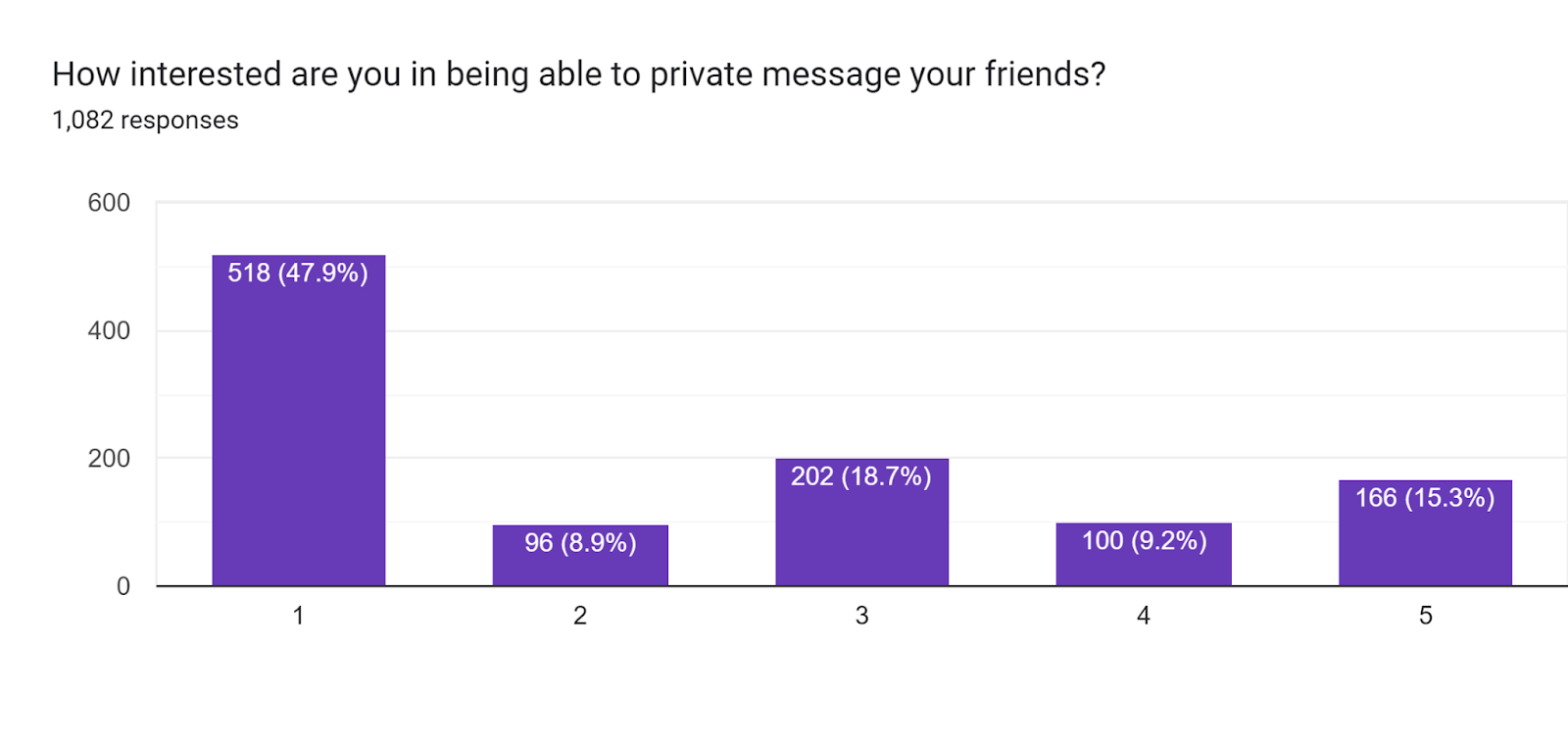
    This response was actually somewhat surprising to us! We thought that the ability to private message friends would be a good way to allow for off-topic chatter without making it visible for those that were uninterested, but 56.8% of people were either very uninterested or uninterested in this feature. Only 24.5% of people were interested or very interested in the feature. This was very helpful feedback. Private messaging adds a layer of complexity to the development process. With such a strong response against private messages it is unlikely we will release this feature in the first phase of the new comment system. There were many responses in the free answer portion that specifically asked for private messages. If you were one of those people, know that this doesn’t mean we won’t ever support private messages. It just means that it will not be prioritized over some of the other highly requested features like expanded search and comment filtering. 
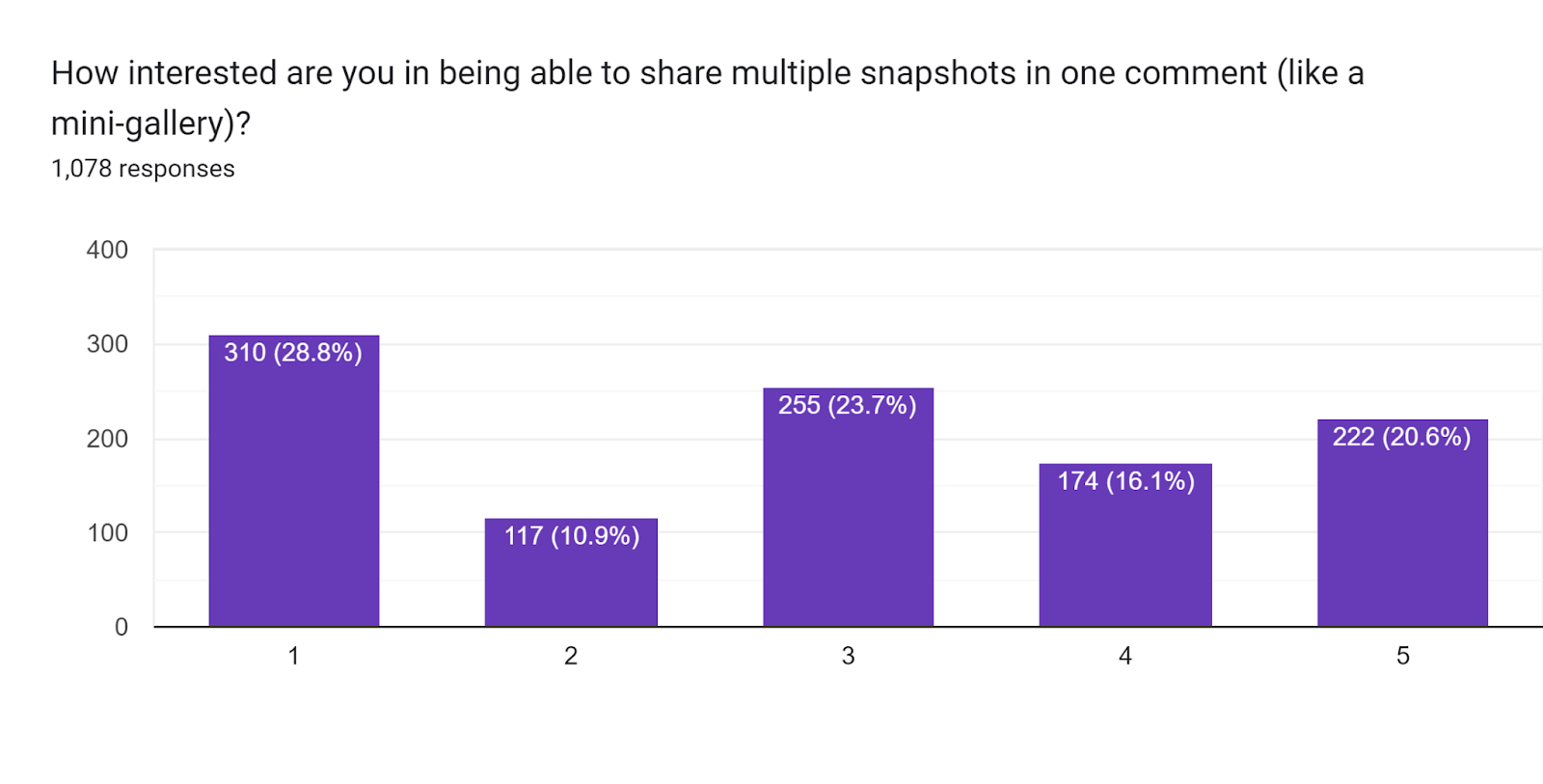
    This feature was suggested in response to a somewhat common complaint about the phenomena of multiple posts of the same photo in chat. We thought if people could curate multi-photo posts it might incentivize them to curate one large post instead of posting a lot of the same photo. The response here is split. 39.7% of people were some form of uninterested, 36.7% had some form of interest. With a split response, the release of this feature will come down to ease of development and implementation. We might ask for more feedback on multi-photo posts when we have a more concrete example to show people. 
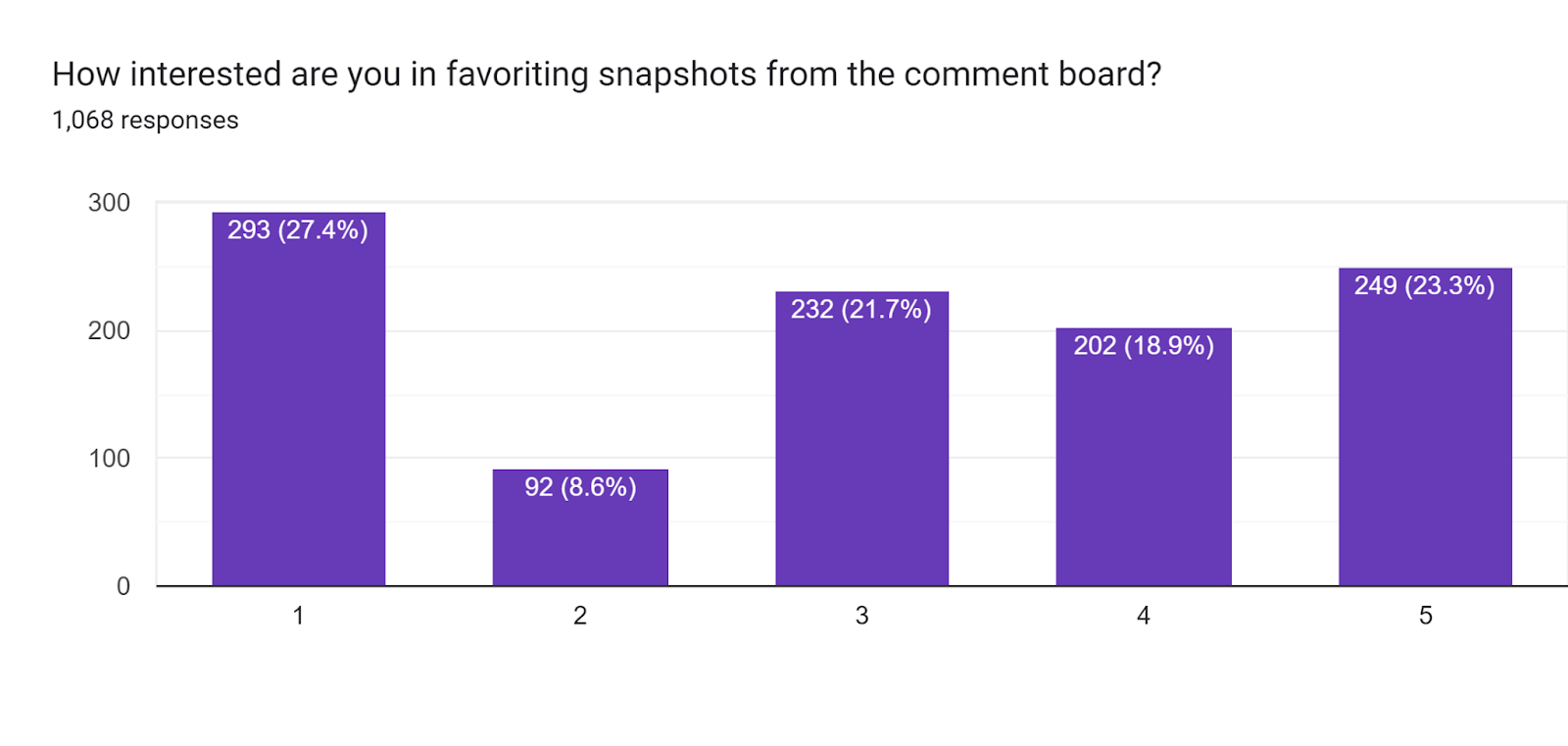
    To be honest, this is a feature that the explore staff is very strongly interested in. We use the Fan Favorites section to create the Fan Cam Friday newsletter. As it stands, it is not super obvious how to favorite other community members’ snapshots. I would not be surprised if some people learn right now from this blog post that they can go to a gallery and favorite other people’s snapshots. Moving this feature directly to the comments would add another way to interact with your friends AND it would help us curate the Friday newsletter better. With 36% of the people uninterested and 42% of people interested, we will probably move forward with this feature!
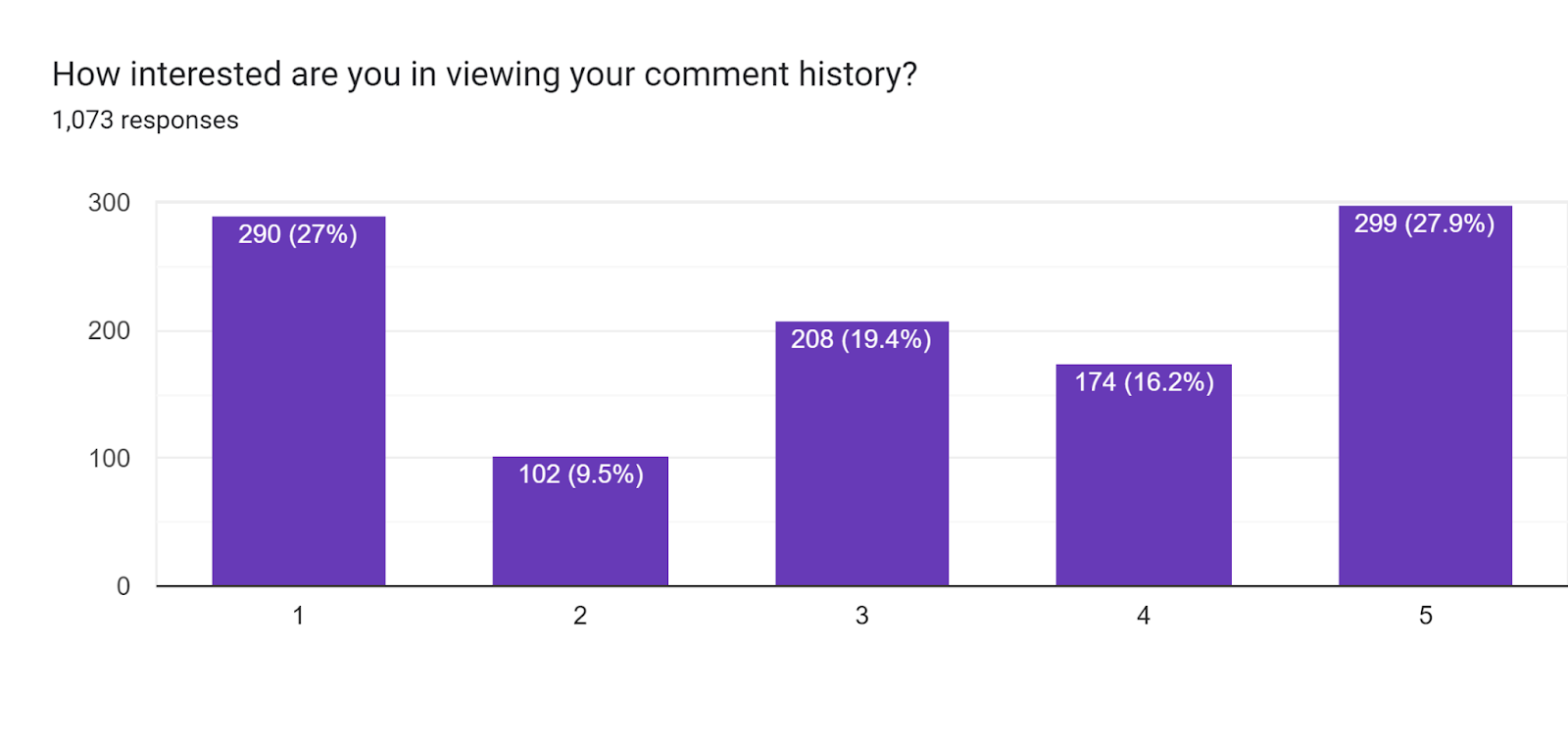
    I actually expected this question to even more strongly favor the Very Interested side than it did. 36.5% of the people were uninterested while 44.1% were interested. We know that comment archiving is critical for several fan wikis. We are exploring ways to import Disqus history into the new comment system. We are currently discussing how long we should archive comments in the new system. Text is fairly inexpensive to store. Addition of media such as photos, videos, and gifs, adds to the eventual storage costs of a self-hosted system. We are trying to find a way to balance the need to archive comments with operational costs. Rest assured we are planning on archiving comments, though for how long is an open question. We might request more feedback later in the development process to understand how you are currently using comment archives. 
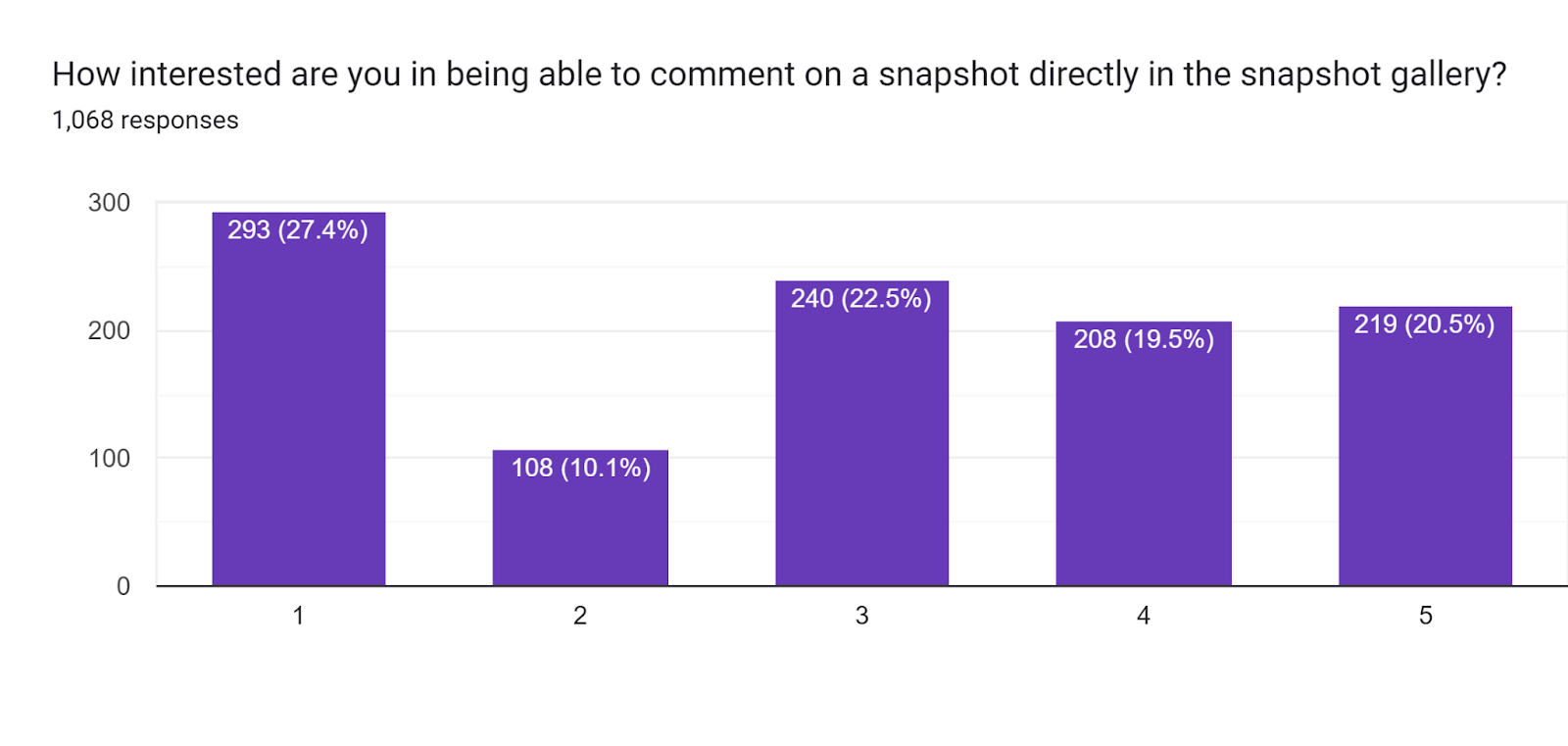
    This feature was suggested as a way to use the snapshot galleries in a new fun way. 37.5% of the respondents were uninterested while 40% of the respondents were interested. Several people mentioned in the free-answer portion of this survey that this would be a great way to discuss bear IDs. It’s a fantastic observation that we didn’t consider! 
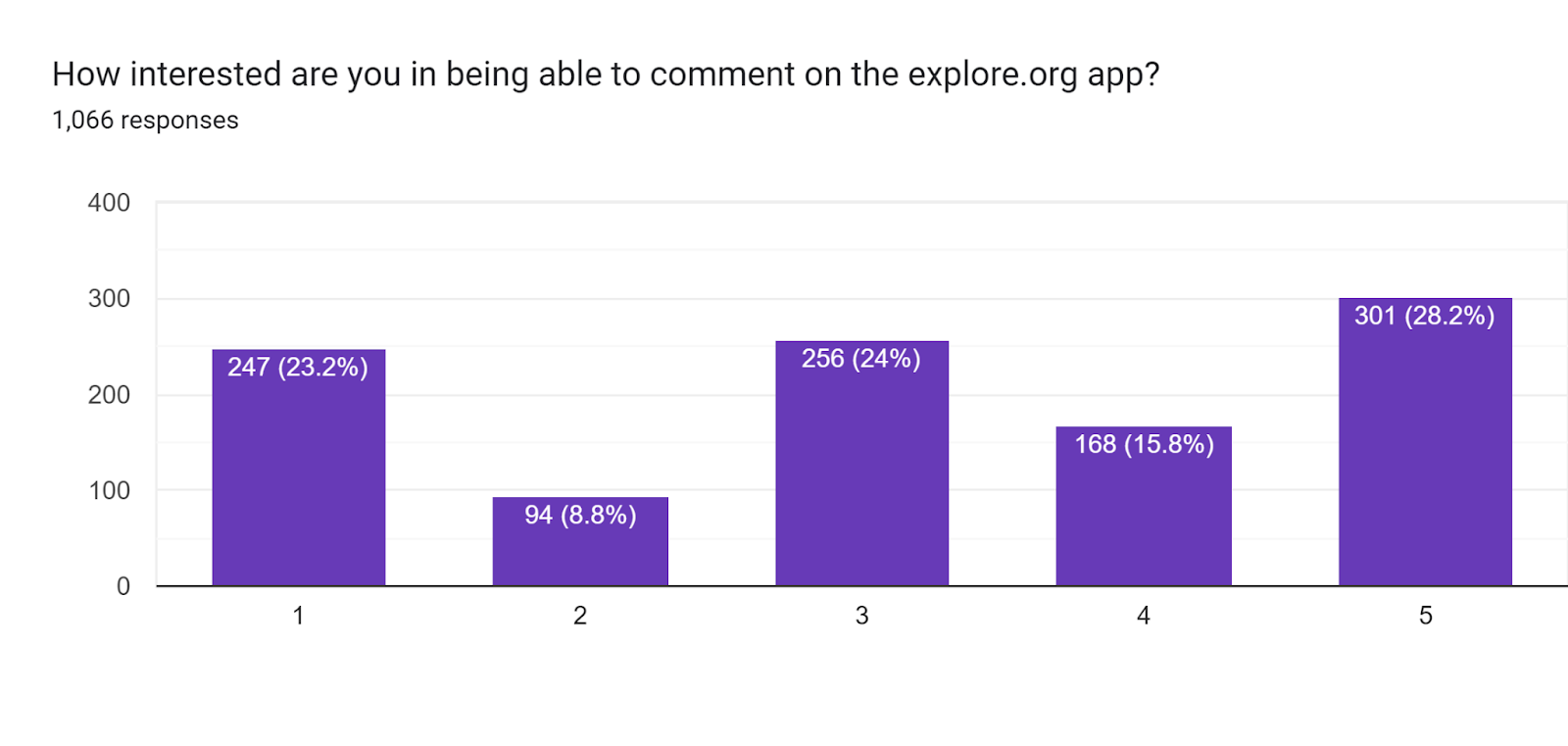
    We often get feedback that the explore.org app would be better if it had comments. 32% of people were uninterested while 44% of the people were interested. We have tried to get Disqus to work with our app multiple times over the years, and it just has not worked. App integration is very high on our feature requirements for a new comment system. 
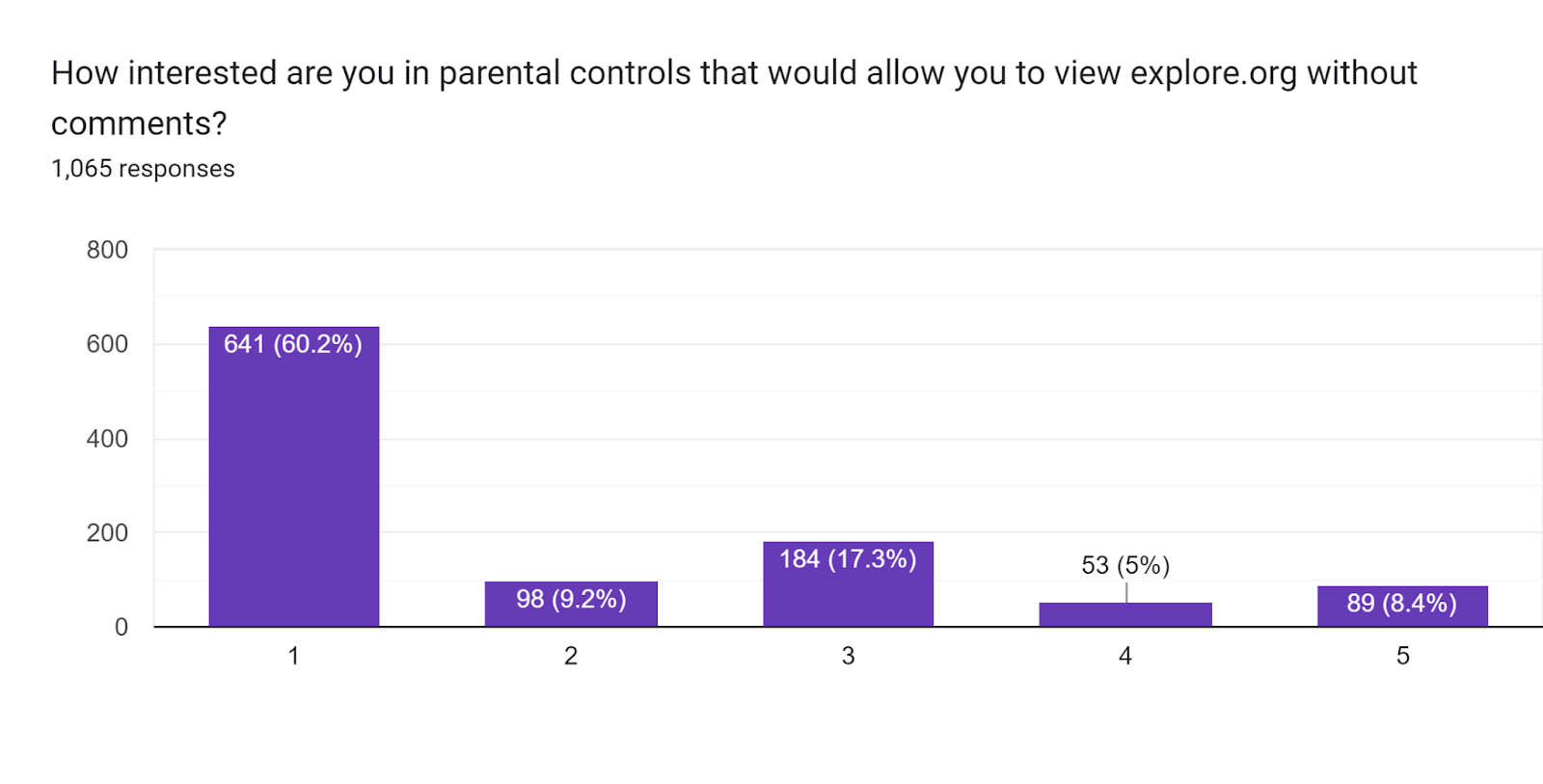
    We suggested this feature because we know that many schools and parents have their kids watch explore. It is not a huge surprise that 69.4% respondents were not interested in this feature while only 13.4% were interested. Explore’s website audience does trend to people who no longer have school age children. This strong response against parental controls means that it will not be very high on the feature list. Again, this does not mean that we will never release this feature, only that it will not be prioritized in the beginning.

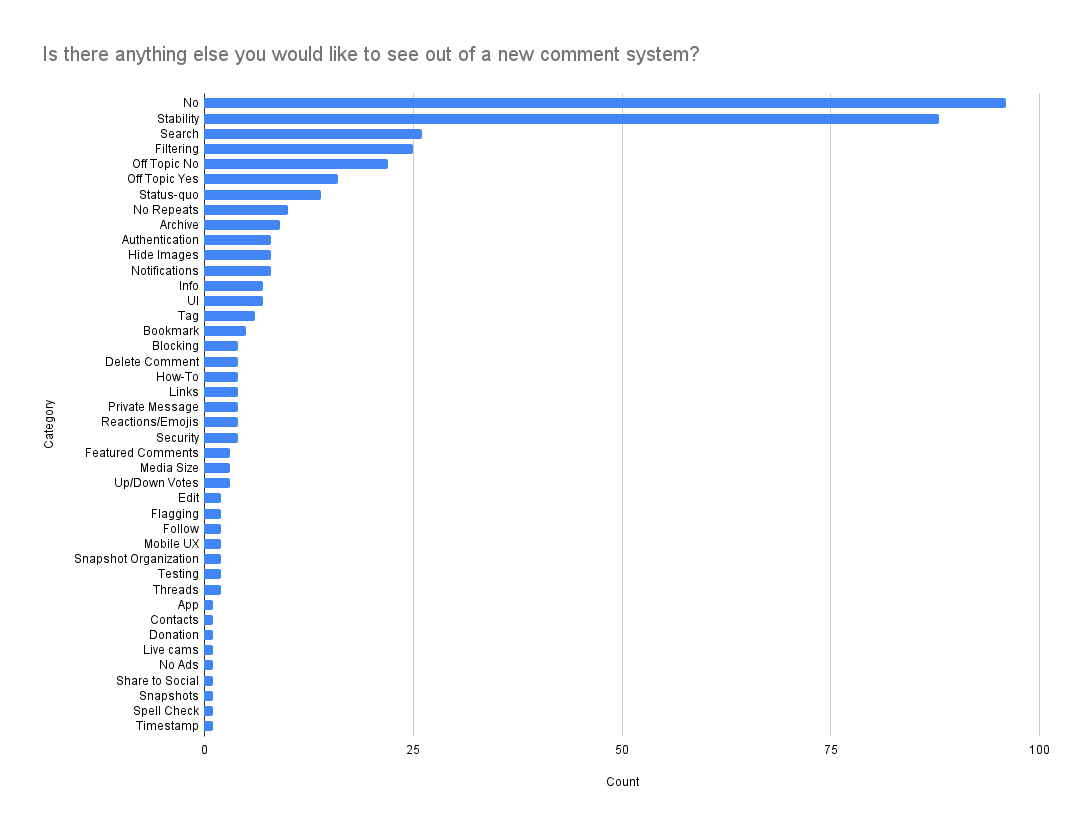
    Is there anything else you’d like to see out of a new comment system?

    Personally, this was the most interesting and insightful part of the whole survey. Some of the features suggested here we have already addressed. I won’t address every suggested feature, but I would like to highlight a few. 
    Stability: 

    This has been addressed throughout this blog. It is our primary goal for a new comment system. The ongoing bugs are detrimental to the community. They are also the primary source of complaints for the explore.org website. 

    Search & Filtering

    These suggestions were the best thing to come out of this survey. So many of you had great ideas for how to use search and filtering to make information easier to find, and to interact easier with other fans. We are currently brainstorming an “off-topic” tag that would allow people to filter out off-topic comments while creating space for people to interact with their friends. 

    Off Topic Comments

    I did say at the top of the blog that we were not addressing moderation policy issues, but I also acknowledged that the off-topic tension is a symptom of the limitations of Disqus. We obviously want people to feel like they are welcome on explore and we understand that many longtime friendships have been formed here. On the other hand, we also got a lot of feedback from people who say that the off-topic comments make them feel unwelcome, and distract them from the goal of learning more about the live cams. It is a difficult balance. We hope that some of the search and filtering options can create room for both perspectives. 

    No Repeated Snapshots 

    This was also a common complaint. We don’t have any solid solutions here yet but we are actively considering how to address this issue. In a similar vein, many people requested a way to hide media. We think a filter that would let you see Images Only or Text Only might be a good solution. 

    Reactions & Emoji’s

    This was also suggested in one of explore’s brainstorming meetings! It is something we are also interested in developing.

    Block and Unblock users

    This was on our list of basic feature requirements already. Not being able to unblock a user on Disqus is confusing to us as well.  

    No Ads

    This came up a few times in the survey. Explore does not, and will never, advertise on the site. If you are currently seeing ads in Disqus please let us know, because they should not be doing that. We can guarantee that there will not be ads in the new product. 

    Conclusion

    Thank you to everyone who made it this far! This will be a long process, but we thank you for helping us start this journey. I didn’t address every feature or concern raised in the survey here, but we have read all of them. Your feedback is critical in making a comment system everyone will enjoy. We will continue to provide updates as we move forward. As always, if you have any questions, comments or concerns, please email us at [email protected]

  • NOAA’s Climate Website May Soon Shut Down

    A screenshot of a Sea Level Rise Viewer map viewer showing the Atlantic and Gulf coasts of the United States.

    body {background-color: #D2D1D5;}

    Climate.gov, NOAA’s portal to the work of their Climate Program Office, will likely soon shut down as most of the staff charged with maintaining it were fired on 31 May, according to The Guardian. The site is funded through a large NOAA contract that also includes other programs. A NOAA manager told now-former employees of a directive “from above” demanding that the contract remove funding for the 10-person climate.gov team.

    “It was a very deliberate, targeted attack,” Rebecca Lindsey, the former program manager for climate.gov, told The Guardian. Lindsey was fired in February as part of the government’s purge of probationary employees. She said that the fate of the website had been under debate for months, with political appointees arguing for its removal and career staffers defending it.

    “We operated exactly how you would want an independent, non-partisan communications group to operate,” Lindsey said. “It does seem to be part of this sort of slow and quiet way of trying to keep science agencies from providing information to the American public about climate.”

    Another former NOAA employee noted that the climate.gov purge spared two website developers. For some, this raised concerns that the climate.gov site might survive, but host anti-science content and misinformation under the guise of a once-trusted source of climate science.

    This move comes amid a slew of other anti-science actions from the Trump Administration, including blocking EPA science funding, halting maintenance of key Arctic data, removing access to longstanding NOAA datasets, proposing to slash NASA’s Earth science funding, and pulling U.S. scientists out of domestic and international climate change reports.

    “Hiding the impacts of climate change won’t stop it from happening,” said one former NOAA contractor, “it will just make us far less prepared when it does.”

    —Kimberly M. S. Cartier (@astrokimcartier.bsky.social), Staff Writer

    A photo of a hand holding a copy of an issue of Eos appears in a circle over a field of blue along with the Eos logo and the following text: Support Eos’s mission to broadly share science news and research. Below the text is a darker blue button that reads “donate today.”
    Text © 2025. AGU. CC BY-NC-ND 3.0
    Except where otherwise noted, images are subject to copyright. Any reuse without express permission from the copyright owner is prohibited.
  • The arid air of Death Valley may actually be a valuable water source

    An innovative device extracted a small glassful of water from the air of Death Valley desert over one day

  • 'Impossible' particle that hit Earth may have been dark matter

    We may already have had our first-ever encounter with dark matter, according to researchers who say a mysteriously high-energy particle detected in 2023 is not a neutrino after all, but something far stranger

  • Major telescope hosts world's largest digital camera: how it will transform astronomy

    Nature, Published online: 11 June 2025; doi:10.1038/d41586-025-01798-2

    Massive telescope will map the Universe and provide an evolving record of the Solar System and distant stars.