Briefing

  • Different kinds of mindfulness may fight different kinds of anxiety

    A group of people meditate while in a yoga class.

    New research lays out a new approach to understanding the relationship between mindfulness and anxiety.

    If you’re anxious about work, finances, the state of the world or anything else, you might try a moment of mindfulness. Paying close attention to the present moment without judgment—the basic idea behind all mindfulness techniques—can help calm anxiety and improve focus, says Resh Gupta, a postdoctoral research associate with the Mindfulness Science and Practice research cluster at Washington University in St. Louis.

    “A lot of research has shown that mindfulness can reduce anxiety symptoms,” she says.

    The calming power of mindfulness is well-known to people who have made the practice a part of their daily lives. Still, experts continue to investigate how it works and which types of mindfulness might be most useful for different types of anxiety, ranging from fleeting bouts of worry to more chronic, clinical anxiety disorders.

    “We all experience anxiety, but it can manifest in many different ways,” Gupta says. “It’s a tough problem to pin down.”

    Instead of taking a one-size-fits-all approach, Gupta and coauthors propose that different kinds of mindfulness practices might be helpful for different varieties of anxiety. The proposed framework should ultimately help us understand how to match anxiety sufferers with more precise treatments, Gupta says.

    The research appears in Neuroscience and Biobehavioral Reviews.

    Todd Braver, a professor in human values and moral development and a professor of psychological and brain sciences, is a coauthor of the paper. The other coauthor is Wendy Heller, a professor of psychology at the University of Illinois Urbana-Champaign.

    “There is a growing recognition that these practices can be incredibly useful in enhancing psychological well-being,” Braver says. “But we still do not fully understand the mechanisms of action by which mindfulness can produce beneficial effects. That’s where the scientific research can be so valuable, by helping us more precisely identify why and how certain practices are effective.”

    Gupta, Braver, and Heller suggest that mindfulness combats anxiety by improving a mental process called cognitive control.

    “Cognitive control is the ability to regulate your thoughts and your actions in a way that helps you achieve your goals,” Gupta says. “For example, if you know you have to go to the grocery store right after work, you can keep that goal in mind during the workday and turn down an offer to do something else after work.”

    As Gupta explains, mindfulness and anxiety have opposite effects on cognitive control. People who are more mindful generally perform better on tasks requiring cognitive control. That observation is supported by neuroimaging studies, which have shown that mindfulness meditation can effectively modulate activity in brain regions that support cognitive control.

    On the other hand, anxiety can worsen cognitive control.

    “Worry occupies a lot of space in the brain’s working memory system,” Gupta says. “This is where your goals are stored.”

    This impairment in cognitive control can intensify worry symptoms, but using mindfulness to improve cognitive control can help interrupt the harmful cycle of worry.

    Depending on the type of anxiety people are experiencing, some approaches might work better than others, Gupta says. People who spend a lot of time worrying may especially benefit from a type of mindfulness meditation called focused attention.

    “Focused attention teaches you to choose an anchor, such as your breath or a sound,” she says. “You keep bringing your attention back to that anchor every time your mind wanders. Instead of focusing on the worry, you’re focusing on the present moment experience.”

    People who are hypervigilant and experiencing a lot of physical symptoms of anxiety—rapid heartbeat, sweaty palms, tightness in the chest—may do better with a different approach.

    “For this type of anxiety, a form of mindfulness meditation called open monitoring may be beneficial,” Gupta says. “Instead of focusing on one thing, such as the breath, you can observe all internal and external experiences from moment to moment in a non-reactive, non-judgmental way.”

    Braver is enthusiastic that recent research will help people gain a greater appreciation of the wide variety of practices that fall under the mindfulness umbrella.

    “People have different options they can choose from, so it becomes easier to find one that best fits your particular temperament, concerns or current situation,” he says.

    “It’s quite empowering to learn these types of practices, and to feel like we can be in charge of how we use them to improve our quality of life.”

    Support for the work came, in part, from the Mindfulness Science and Practice cluster and the Washington University in St. Louis Arts & Sciences’ Incubator for Transdisciplinary Futures.

    Source: Washington University in St. Louis

    The post Different kinds of mindfulness may fight different kinds of anxiety appeared first on Futurity.


  • Your teens’ sleep habits may affect how their brains work

    A teen boy sleeps in bed as light pours in the window behind him.

    Your teen’s sleeping habits may affect how their brain functions, according to new research.

    And lack of quality sleep may put kids at risk of developing problem behaviors in the future.

    The study found that adolescents who got less sleep had less connectivity between the parts of the brain that play a critical role in decision making, self-reflection, and processing information. Malfunctions in these parts of the brain are also linked to mental illnesses such as depression, ADHD, and schizophrenia.

    The children with less brain connectivity in this region were more likely to exhibit behavioral issues like acting out, poor impulse control, and aggressiveness.

    “Sleep isn’t just good for children. It helps keep their mental health intact and helps them regulate their emotions,” says Assaf Oshri, corresponding author of the study and a professor in the University of Georgia College of Family and Consumer Sciences. Oshri also serves as director of the UGA Georgia Center for Developmental Science.

    “The paper shows that sleep duration and sleep efficiency are linked to distinct patterns of brain network connectivity that are predictive of problem behaviors.”

    The study suggests that interventions targeted at increasing adolescents’ sleep could help prevent conduct problems in the future.

    The researchers relied on data from the Adolescent Brain and Cognitive Development Study, which is the largest long-term study of brain development and child health in the US.

    The present study followed more than 2,800 adolescents, using Fitbits to objectively track how well and for how long the children slept for an average of two weeks. The researchers compared that data with the same children’s MRIs. The imaging identified distinct patterns in connectivity between brain regions.

    The children’s parents also reported on problem behaviors during the second and third year.

    Boys, older children, and kids from minority races tended to have shorter periods of sleep. Boys and minority children were also more likely to demonstrate problem behaviors in the second and third years of the study period.

    The study’s findings suggest the effects of frequent nights of too little sleep snowball.

    “Adolescence is an extremely critical period for brain development,” says Linhao Zhang, lead author of the study and a recent doctoral graduate of the College of Family and Consumer Sciences.

    “And sleep is critical for brain development. But many adolescents don’t get enough quality sleep at night.”

    That lack of quality sleep can make it more difficult for children to learn to regulate their emotions and control their impulses.

    “How adolescents sleep influences how their brains function, and that influences their mental health outcomes,” Zhang says.

    “It’s not just about how long you slept. It’s how well did you sleep? Did you take a long time to fall asleep? Did you wake up in the middle of the night?”

    The research appears in Brain and Behavior.

    Source: University of Georgia

    The post Your teens’ sleep habits may affect how their brains work appeared first on Futurity.

  • Will you be able to get a COVID shot this fall?

    A nurse gives a person a COVID booster shot in their arm.

    Significant changes are potentially ahead for COVID-19 vaccine eligibility.

    On May 27, Health and Human Services (HHS) Secretary Robert F. Kennedy, Jr., announced the vaccine will no longer be recommended for healthy children or pregnant women, a move that breaks with previous expert guidance. He publicized the change in a video on X, saying that it’s “common sense and it’s good science.”

    This follows a May 20 vaccine policy framework from the Food & Drug Administration (FDA), published in the New England Journal of Medicine, stating that boosters will be available only to adults over 65 and younger individuals with one high-risk medical condition (confusingly, pregnant women were also included in this list). Manufacturers like Moderna and Pfizer will be required to run new clinical trials to prove whether boosters continue to benefit healthy individuals under 65.

    These changes have significant implications for the fall vaccination campaign, with uncertainty over whether healthy people can still get a vaccine even if it’s not recommended for them and whether insurers will keep paying for the shots. The FDA previously said it would make the seasonal flu vaccine available to people of almost all ages and health risk levels.

    On May 22, a Centers for Disease Control and Prevention (CDC) advisory panel presented new data showing that receiving a COVID booster last fall provided added protection, even in individuals who had been infected and previously vaccinated. The panel meets in June to make recommendations about the fall shots, but researchers seem skeptical that they will overrule these two new policy announcements.

    Nahid Bhadelia is a Boston University Chobanian & Avedisian School of Medicine associate professor of infectious diseases. Bhadelia is also the founding director of the BU Center for Emerging Infectious Diseases Policy & Research (CEID), which works to improve international pandemic resilience, and she previously worked on the White House COVID-19 Response Team.

    Here, Bhadelia digs into what to make of the recent COVID vaccine guidance changes—and whether you will be eligible for a shot this fall:

    The post Will you be able to get a COVID shot this fall? appeared first on Futurity.

  • Listen: Everything you should know about fireflies

    Fireflies twinkle with green light at night in a forest.

    Firefly. Lightning bug. Whatever you call them, these luminous beetles are out and about right now, flashing their abdomens and looking for love.

    Clyde Sorenson is a professor of entomology at North Carolina State University.

    In this podcast, Sorenson walks us through the unique characteristics of our favorite bug of summer, from voracious venomous larvae to gently glowing grownups:


    Source: North Carolina State University

    The post Listen: Everything you should know about fireflies appeared first on Futurity.

  • Team maps Neanderthal travels across Europe and Eurasia

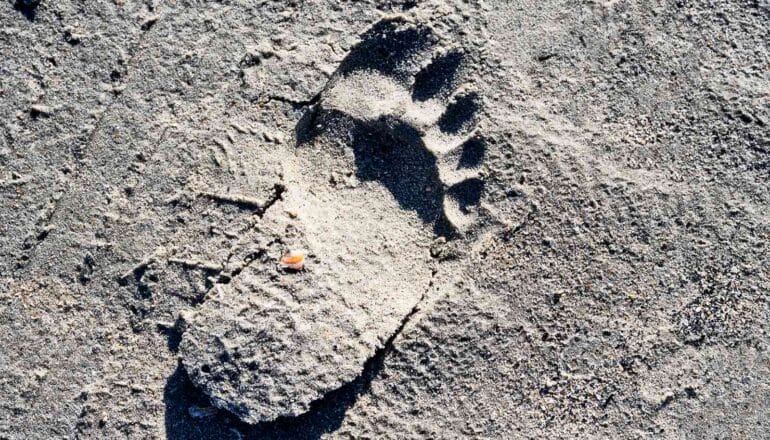
    A single footprint in gray dirt.

    Anthropologists have mapped Neanderthals’ long and winding roads across Europe and Eurasia.

    Recent scholarship has concluded that Neanderthals made a second major migration from Eastern Europe to Central and Eastern Eurasia between 120,000 and 60,000 years ago.

    But the routes they took have long been a mystery—primarily because there are few archaeological sites connecting the two regions.

    In a new analysis, a team of anthropologists—using computer simulations—has offered a map of possible pathways, which concludes Neanderthals likely used river valleys as natural highways and traveled during warmer periods to move approximately 2,000 miles (3,250 km) in less than 2,000 years.

    “Our findings show that, despite obstacles like mountains and large rivers, Neanderthals could have crossed northern Eurasia surprisingly quickly,” explains Emily Coco, who began the study as a New York University doctoral student and is now a postdoctoral researcher at Portugal’s University of Algarve.

    The research, which appears in the journal PLOS One, was conducted with Radu Iovita, an associate professor at NYU’s Center for the Study of Human Origins.

    “These findings provide important insights into the paths of ancient migrations that cannot currently be studied from the archaeological record and reveal how computer simulations can help uncover new clues about ancient migrations that shaped human history,” observes Coco.

    In building their simulation of Neanderthals’ two-millennia journey, Coco and Iovita considered the elevation of the terrain, reconstructed ancient rivers, glacial barriers, and temperature to model movement decisions of individuals—an approach similar to that used to model both modern human and animal movement, but not previously applied to Neanderthals.

    The authors find possible migration routes in two ancient periods—Marine Isotope Stage 5e [MIS 5e] (beginning approximately 125,000 years ago) and Marine Isotope Stage 3 [MIS 3] (beginning approximately 60,000 years ago)—marked by warmer temperatures and therefore more suitable for movement.

    Computer simulations, conducted on the NYU Greene Supercomputer Cluster, indicated that Neanderthals could have reached Eurasia’s Siberian Altai Mountains within 2,000 years during either MIS 5e or MIS 3 using multiple possible routes that all follow the same basic northern path through the Ural Mountains and southern Siberia, often intersecting with known archaeological sites from the same time periods.

    The authors add that the study sheds light on Neanderthal interactions with other ancient human groups. Specifically, their routes would have taken them into areas already occupied by Denisovans—consistent with existing evidence of interbreeding between the two species.

    “Neanderthals could have migrated thousands of kilometers from the Caucasus Mountains to Siberia in just 2,000 years by following river corridors,” says Iovita.

    “Others have speculated on the possibility of this kind of fast, long-distance migration based on genetic data, but this has been difficult to substantiate due to limited archaeological evidence in the region. Based on detailed computer simulations, it appears this migration was a near-inevitable outcome of landscape conditions during past warm climatic periods.”

    Source: NYU

    The post Team maps Neanderthal travels across Europe and Eurasia appeared first on Futurity.

  • A diet full of tiny plastics triggered health problems in mice

    Mice exposed to polystyrene nanoplastics developed problems in their guts and livers. It’s not yet clear if humans are similarly affected.

  • Preemptively cutting rhinos’ horns cuts poaching

    Comparing various tactics for protecting rhinos suggests that dehorning them drastically reduces poaching.

  • Precolonial farmers thrived in one of North America’s coldest places

    Ancestral Menominee people in what’s now Michigan’s Upper Peninsula grew maize and other crops on large tracts of land despite harsh conditions.

  • A private Japanese spacecraft failed on its way to the moon’s surface 

    The spacecraft’s owner, ispace, is attempting to land these crafts to commercialize lunar resources.

  • A cup of chickpeas a day lowers cholesterol

    Adding a cup of chickpeas or black beans to people’s daily diets could improve health by lowering cholesterol and inflammation, a new study suggests.