Briefing

  • Genetically Rescued Organism: Toward A Solution For Sudden Oak Death

    Genetically Rescued Organism: Toward A Solution For Sudden Oak Death

    Sudden oak death, caused by the pathogen Phythophthora ramorum, is one of the most ecologically devastating forest diseases in North America, responsible for the deaths of millions of oaks and tanoaks along the coast.

    Science to the rescue? After the success of genetically modified organisms in things like insulin and food, a recent trend is Genetically Rescued Organisms. These GROs would use science to create natural resistance, like a vaccine for plants, and reduce the impact of altered species composition, released carbon pools, and greater fire risk the deaths bring.

    Before that can happen, scientists need to better understand the basic biology of Phythophthora ramorum, including how well it sporulates on common plants.


    Image by RegalShave from Pixabay

    Scientists at the University of California, Davis, set out to investigate the sporulation potential of this pathogen on common California plant species. They collected leaves from 13 common plant hosts in the Big Sur-region and inoculated them with the causal pathogen. They found that most of the species produced spores, though there was a ride range, with bay laurel and tanoak producing significantly more sporangia than the other species. They also observed an inconsistent relationship between sporulation and lesion size, indicating that visual symptoms are not a reliable metric of sporulation potential.

     “Our study is the first to investigate the sporulation capacity on a wide range of common coastal California native plant species and with a large enough sample size to statistically distinguish between species,” explained first author Dr. Lisa Rosenthal. “It largely confirms what was previously reported in observational field studies – that tanoak and bay laurel are the main drivers of sudden oak death infections—but also indicates that many other hosts are capable of producing spores.”

    Citation: Lisa M. Rosenthal, Sebastian N. Fajardo, and David M. Rizzo, Sporulation Potential of Phytophthora ramorum Differs Among Common California Plant Species in the Big Sur Region, Plant Disease 17 Aug 2021 https://doi.org/10.1094/PDIS-03-20-0485-RE

    sb admin
    Mon, 11/08/2021 – 17:47

    Categories

  • Liangzhu, Venice of the Stone Age, Collapsed Due To Climate Change

    Liangzhu, Venice of the Stone Age, Collapsed Due To Climate Change

    In the Yangtze Delta, about 160 kilometres southwest of Shanghai, the archeological ruins of Liangzhu City are located. There, a highly advanced culture blossomed about 5,300 years ago, thanks to the engineering of large hydraulic structures.

    The walled city had a complex system of navigable canals, dams and water reservoirs. This system made it possible to cultivate very large agricultural areas throughout the year. In the history of human civilization, it is one of the first examples of highly developed communities based on a water infrastructure.

    And they did it all without metal.

    Long undiscovered, the archaeological site is now considered a well-preserved record of Chinese civilisation dating back more than 5000 years and was declared a UNESCO World Heritage Site in 2019. However, the advanced civilization of this city came to an abrupt end.

    “A thin layer of clay was found on the preserved ruins, which points to a possible connection between the demise of the advanced civilization and floods of the Yangtze River or floods from the East China Sea. No evidence could be found for human causes such as warlike conflicts,” explains Christoph Spötl of the University of Innsbruck. 


    The dripstones of Shennong Cave (pictured) and Jiulong Cave provide an accurate glimpse into the time of the Liangzhu culture’s collapse about 4300 years ago. Credit: Haiwei Zhang

    Dripstones store the answer

    Caves and their deposits, such as dripstones, are among the most important climate archives that exist. They allow the reconstruction of climatic conditions above the caves up to several 100,000 years into the past. Since it is still not clear what caused the sudden collapse of the Liangzhu culture, the research team searched for suitable archives in order to investigate a possible climatic cause of this collapse.

    Geologist Haiwei Zhang from Xi’an Jiaotong University in Xi’an took samples of stalagmites from the two caves Shennong and Jiulong, which are located southwest of the excavation site.

    Data from the stalagmites show that between 4345 and 4324 years ago there was a period of extremely high precipitation. Evidence for this was provided by the isotope records of carbon, which were measured at the University of Innsbruck. The precise dating was done by uranium-thorium analyses at Xi’an Jiaotong University, whose measurement accuracy is ± 30 years.

    The massive monsoon rains probably led to such severe flooding of the Yangtze and its branches that even the sophisticated dams and canals could no longer withstand these masses of water, destroying Liangzhu City and forcing people to flee. The very humid climatic conditions continued intermittently for another 300 years, as the geologists show from the cave data.

    Citation: Haiwei Zhang, Hai Cheng, Ashish Sinha, Christoph Spötl, Yanjun Cai et al. Collapse of the Liangzhu and other Neolithic cultures in the lower Yangtze region in response to climate changeSci. Adv., 2021 DOI: 10.1126/sciadv.abi9275

    sb admin
    Thu, 12/02/2021 – 03:41

    Categories

  • No, COVID-19 Vaccines Do Not Cause Infertility – Not Getting It Might

    No, COVID-19 Vaccines Do Not Cause Infertility – Not Getting It Might

    Despite claims of anti-vaccine activists no different than groups that used to claim vaccines cause autism, COVID-19 vaccines do not impact fecundability—the probability of conception per menstrual cycle—in female or male partners who received the Pfizer-BioNTech, Moderna, or Johnson & Johnson vaccines.

    The prospective study instead indicates that COVID-19 infection among males may temporarily reduce fertility— an outcome that could be avoidable through vaccination.

    Lead author Dr. Amelia Wesselink, epidemiologist at  Boston University School of Public Health, and colleagues analyzed survey data on COVID-19 vaccination and infection, and fecundability, among female and male participants in the BUSPH-based Pregnancy Study Online (PRESTO), an ongoing NIH-funded study that enrolls women trying to conceive, and follows them from preconception through six months after delivery. Participants included 2,126 women in the US and Canada who provided information on sociodemographics, lifestyle, medical factors, and characteristics of their partners from December 2020 to September 2021, and the participants were followed in the study through November 2021.

    The researchers calculated the per menstrual cycle probability of conception using self-reported dates of participants’ last menstrual period, typical menstrual cycle length, and pregnancy status. Fertility rates among female participants who received at least one dose of a vaccine were nearly identical to unvaccinated female participants. Fecundability was also similar for male partners who had received at least one dose of a COVID-19 vaccine compared with unvaccinated male participants. Additional analyses that considered the number of vaccine doses, brand of vaccine, infertility history, occupation, and geographic region also indicated no effect of vaccination on fertility.

    While COVID-19 infection was not strongly associated with fertility, men who tested positive for COVID within 60 days of a given cycle had reduced fertility compared to men who never tested positive, or men who tested positive at least 60 days prior. This data supports previous research that has linked COVID-19 infection in men with poor sperm quality and other reproductive dysfunction.

    “These data provide reassuring evidence that COVID vaccination in either partner does not affect fertility among couples trying to conceive,” says study senior author Dr. Lauren Wise, professor of epidemiology at BUSPH. “The prospective study design, large sample size, and geographically heterogeneous study population are study strengths, as was our control for many variables such as age, socioeconomic status, preexisting health conditions, occupation, and stress levels.”

    The new data also help quell concerns about COVID-19 vaccines and fertility that arose from anecdotal reports of females experiencing menstrual cycle changes following vaccination.

    sb admin
    Thu, 01/20/2022 – 20:17

    Categories

  • Red Light Myopia Therapy Can Injure Your Retina

    Red Light Myopia Therapy Can Injure Your Retina

    Over the last few years, low-level red light (LLRL) therapy has become popular to control myopia, or nearsightedness, especially in children. In LLRL therapy, children are instructed to look into a red light-emitting instrument for three minutes, twice a day, five days a week, for the duration of the treatment period, which could last years. 


    Studies reported the treatment as effective and responsible for significant reduction in myopia progression and it is already being used to address myopia in over 100,000 pediatric patients.  


    Despite passing clinical trials it’s not safe in all cases, so stricter standards need to be created, according to University of Houston Professor Lisa Ostrin, who says the therapy can put the retina at risk of photochemical and thermal damage


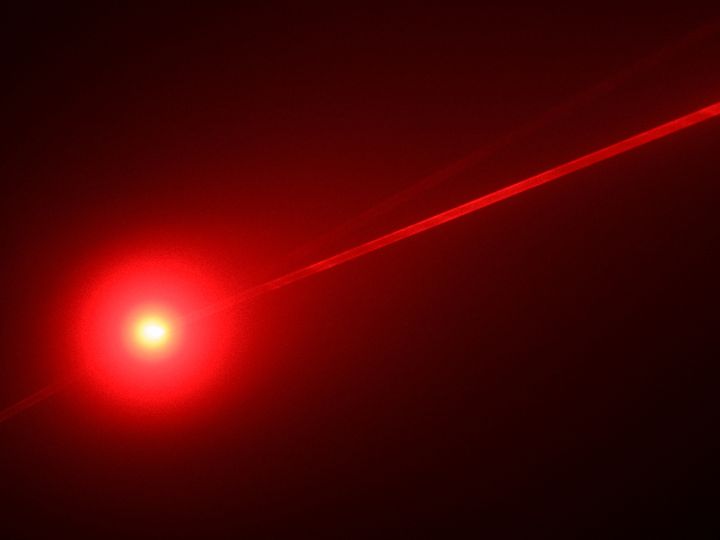
    Photo courtesy of GETTY Images, provided by the University of Houston


    Ostrin examined two different LLRL devices, and while both instruments were confirmed to be Class-1 laser products, as defined by International Electrotechnical Commission standards, according to Ostrin they are unsafe to view continuously for the required treatment duration of three minutes.  


    Class-1 lasers are low-powered devices that are considered safe from all potential hazards when viewed accidentally and briefly. Examples of Class-1 lasers are laser printers, CD players and digital video disc (DVD) devices. Class-1 lasers are not meant to be viewed directly for extended periods. 


     “We found that the red-light instruments for myopia exceed safety limits,” said Ostrin. “For both LLRL devices evaluated here, three minutes of continuous viewing approached or surpassed the luminance dose MPE, putting the retina at risk of photochemical damage.” 

    sb admin
    Mon, 01/29/2024 – 14:18

    Categories

  • Crowdsourced Geospatial Data Will Mean A 'Seismic Shift'

    Crowdsourced Geospatial Data Will Mean A 'Seismic Shift'

    Astronomy has long been dominated by expert amateurs but with geospatial data everywhere, thanks to widely available internet and smartphones, it is not just that directions that were once only available in a paper map are now updated on your phone in real time to account for traffic.

    It is changing the relationships of science also. Crowdsourced scientific data will go from obscure folding protein folding of 15 years ago to relevance everywhere.

    That evolution will continue to be driven by how the data is gathered.

    Credit: Xiao Huang, Emory University


    According to the authors, urban planning, transportation and environmental monitoring have been particularly impacted by crowdsourcing information, with “unprecedented real-time sights and community-driven perspectives, often leading to more responsive and adaptive decision-making processes,” thanks to user-generated data.


    The same type of data is informing the commercial sector, as well, with better-informed customer-centric product development and marketing strategies. The significance of this shift lies in its empowerment of ordinary individuals to contribute to and influence fields traditionally dominated by experts and authorities. This democratization has not only diversified the types of data available but has also led to richer, more multifaceted insighted into human behavior and environmental changes.


    Despite such a shift, however, the researchers said a comprehensive, overarching perspective to connect the various data sources, such as social media platforms, with the application domains, such as public health or remote sensing, is still needed.


    “We aim to bridge this gap and provide a holistic view of the use and potential of crowdsourcing geospatial data,” said Emory University professor Xiao Huang. “In this study, we conduct an exhaustive analysis of the current efforts, possibilities and obstacles associated with crowdsourced geospatial data across two fundamental perspectives: human observations and Earth observations.”


    Earth observations refers to the work of large entities, such as academic institutions or government bodies to record data, as opposed to human observations made on social media, for example. In coupling these two perspectives, the researchers identified seven specific challenges: ensuring data quality and accuracy; protecting data privacy; training and educating non-experts; sustaining data collection; navigating legal and ethical issues; and interpreting data. Their paper summarizes the current state of affairs in each area, as well as a potential pathway forward.


    “Crowdsourced geospatial data has a critical role and vast potential in enhancing human and Earth observations,” Huang said. “This data, contributed by the general public through various platforms, offers high-resolution spatiotemporal observations that traditional methods might miss. This comprehensive review paper underscores the democratization of data collection and its implications for various sectors, emphasizing the necessity of integrating these non-traditional data sources for more comprehensive and nuanced understanding and decision making.”


    The researchers identified three primary future directions: expanding the scope of geospatial crowdsourcing by harnessing the power of the crowd; pioneering a sustainable crowdsourcing ecosystem, from motivation to retention; and translating crowdsourced geospatial data into real-world impact.

    sb admin
    Thu, 02/01/2024 – 22:10

    Categories

  • Curiosity Found New Carbon Molecules On Mars. What Does It Mean For Alien Life?

    Curiosity Found New Carbon Molecules On Mars. What Does It Mean For Alien Life?

    Nasa’s Curiosity Mars rover has detected the largest organic (carbon-containing) molecules ever found on the red planet. The discovery is one of the most significant findings in the search for evidence of past life on Mars. This is because, on Earth at least, relatively complex, long-chain carbon molecules are involved in biology. These molecules could actually be fragments of fatty acids, which are found in, for example, the membranes surrounding biological cells.


    Scientists think that, if life ever emerged on Mars, it was probably microbial in nature. Because microbes are so small, it’s difficult to be definitive about any potential evidence for life found on Mars. Such evidence needs more powerful scientific instruments that are too large to be put on a rover.


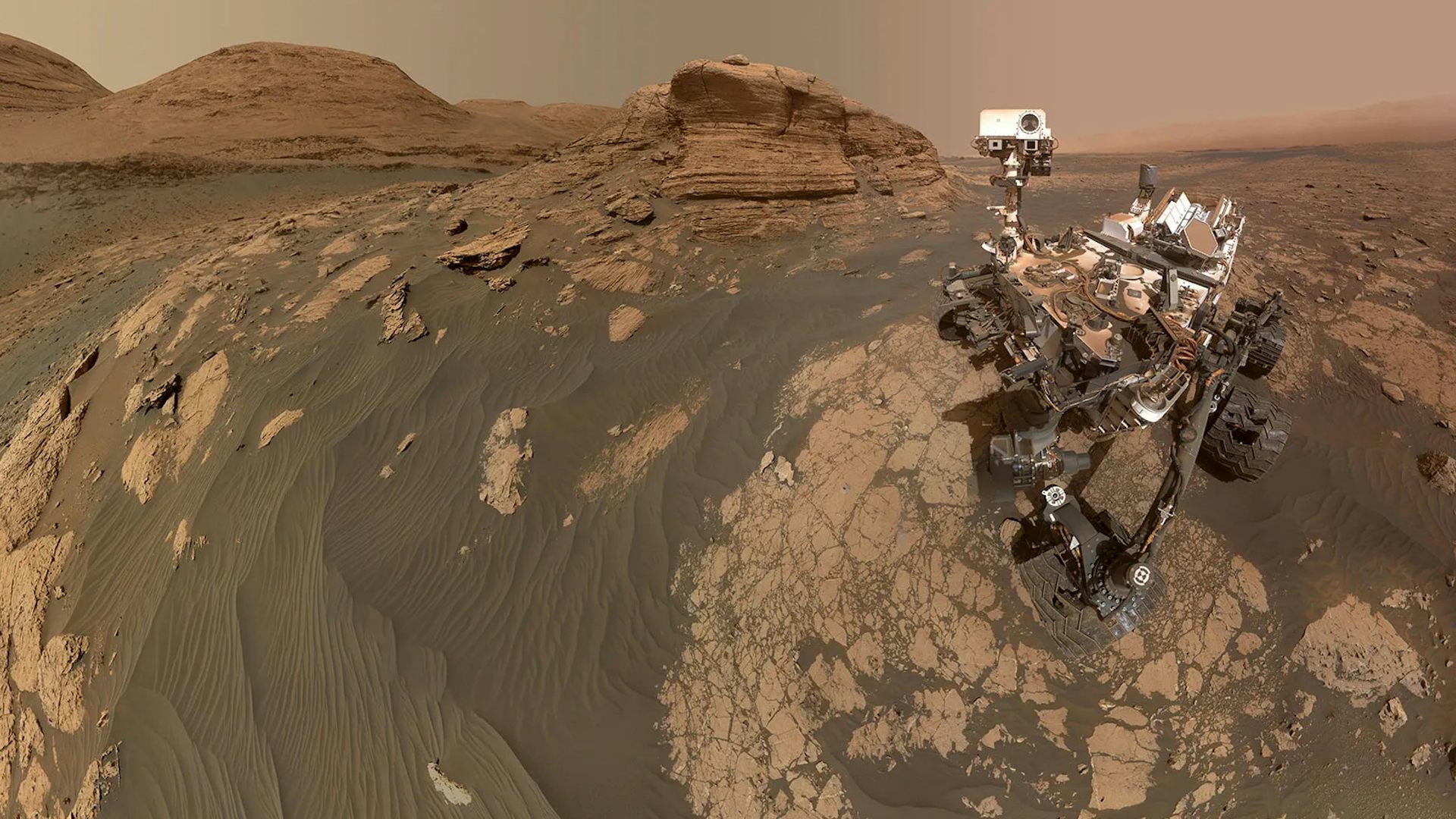
    Curiosity rover near the site of Mont Mercou on Mars. Source: NASA/JPL-Caltech/MSSS


    The organic molecules found by Curiosity consist of carbon atoms linked in long chains, with other elements bonded to them, like hydrogen and oxygen. They come from a 3.7-billion-year-old rock dubbed Cumberland, encountered by the rover at a presumed dried-up lakebed in Mars’s Gale Crater. Scientists used the Sample Analysis at Mars (Sam) instrument on the Nasa rover to make their discovery.


    Scientists were actually looking for evidence of amino acids, which are the building blocks of proteins and therefore key components of life as we know it. But this unexpected finding is almost as exciting. The research is published in Proceedings of the National Academies of Science.


    Among the molecules were decane, which has 10 carbon atoms and 22 hydrogen atoms, and dodecane, with 12 carbons and 26 hydrogen atoms. These are known as alkanes, which fall under the umbrella of the chemical compounds known as hydrocarbons.


    It’s an exciting time in the search for life on Mars. In March this year, scientists presented evidence of features in a different rock sampled elsewhere on Mars by the Perseverance rover. These features, dubbed “leopard spots” and “poppy seeds”, could have been produced by the action of microbial life in the distant past, or not. The findings were presented at a US conference and have not yet been published in a peer reviewed journal.


    The Mars Sample Return mission, a collaboration between Nasa and the European Space Agency, offers hope that samples of rock collected and stored by Perseverance could be brought to Earth for study in laboratories. The powerful instruments available in terrestrial labs could finally confirm whether or not there is clear evidence for past life on Mars. However, in 2023, an independent review board criticized increases in Mars Sample Return’s budget. This prompted the agencies to rethink how the mission could be carried out. They are currently studying two revised options.


    Signs of life?


    Cumberland was found in a region of Gale Crater called Yellowknife Bay. This area contains rock formations that look suspiciously like those formed when sediment builds up at the bottom of a lake. One of Curiosity’s scientific goals is to examine the prospect that past conditions on Mars would have been suitable for the development of life, so an ancient lakebed is the perfect place to look for them.

    Cumberland
    The Martian rock known as Cumberland, which was sampled in the study. Credit: NASA/JPL-Caltech/MSSS


    The researchers think that the alkane molecules may once have been components of more complex fatty acid molecules. On Earth, fatty acids are components of fats and oils. They are produced through biological activity in processes that help form cell membranes, for example. The suggested presence of fatty acids in this rock sample has been around for several years, but the new paper details the full evidence.

    Fatty acids are long, linear hydrocarbon molecules with a carboxyl group (COOH) at one end and a methyl group (CH3) at the other, forming a chain of carbon and hydrogen atoms.

    A fat molecule consists of two main components: glycerol and fatty acids. Glycerol is an alcohol molecule with three carbon atoms, five hydrogens, and three hydroxyl (chemically bonded oxygen and hydrogen, OH) groups. Fatty acids may have 4-36 carbon atoms; however, most of them have 12-18. The longest carbon chains found in Cumberland are 12 atoms long.

    Mars sample return

    Mars Sample Return will deliver Mars rocks to Earth for study. This artist’s impression shows the ascent vehicle leaving Mars with rock samples. Nasa/JPL-Caltech


    Organic molecules preserved in ancient Martian rocks provide a critical record of the past habitability of Mars and could be chemical biosignatures (signs that life was once there).


    The sample from Cumberland has been analyzed by the Sam instrument many times, using different experimental techniques, and has shown evidence of clay minerals, as well as the first (smaller and simpler) organic molecules found on Mars, back in 2015. These included several classes of chlorinated and sulphur-containing organic compounds in Gale crater sedimentary rocks, with chemical structures of up to six carbon atoms. The new discovery doubles the number of carbon atoms found in a single molecule on Mars.


    The alkane molecules are significant in the search for biosignatures on Mars, but how they actually formed remains unclear. They could also be derived through geological or other chemical mechanisms that do not involve fatty acids or life. These are known as abiotic sources. However, the fact that they exist intact today in samples that have been exposed to a harsh environment for many millions of years gives astrobiologists (scientists who study the possibility of life beyond Earth) hope that evidence of ancient life might still be detectable today.


    It is possible the sample contains even longer chain organic molecules. It may also contain more complex molecules that are indicative of life, rather than geological processes. Unfortunately, Sam is not capable of detecting those, so the next step is to deliver Martian rock and soil to more capable laboratories on the Earth. Mars Sample Return would do this with the samples already gathered by the Perseverance Mars rover. All that’s needed now is the budget.


    By Derek Ward-Thompson, Professor of Astrophysics, University of Central Lancashire and Megan Argo, Senior Lecturer in Astronomy, University of Central Lancashire. This article is republished from The Conversation under a Creative Commons license. Read the original article.The Conversation

    sb admin
    Fri, 03/28/2025 – 13:12

    Categories

  • No Secretary Kennedy, The MMR Vaccine Does Not Contain 'Aborted Fetus Debris'

    No Secretary Kennedy, The MMR Vaccine Does Not Contain 'Aborted Fetus Debris'

    Robert F. Kennedy Jr, the United States’ top public health official, recently claimed some religious groups avoid the measles, mumps and rubella (MMR) vaccine because it contains “aborted fetus debris” and “DNA particles”.

    The US is facing its worst measles outbreaks in years with nearly 900 cases across the country and active outbreaks in several states.

    At the same time, Kennedy, secretary of the Department of Health and Human Services, continues to erode trust in vaccines.

    So what can we make of his latest claims?
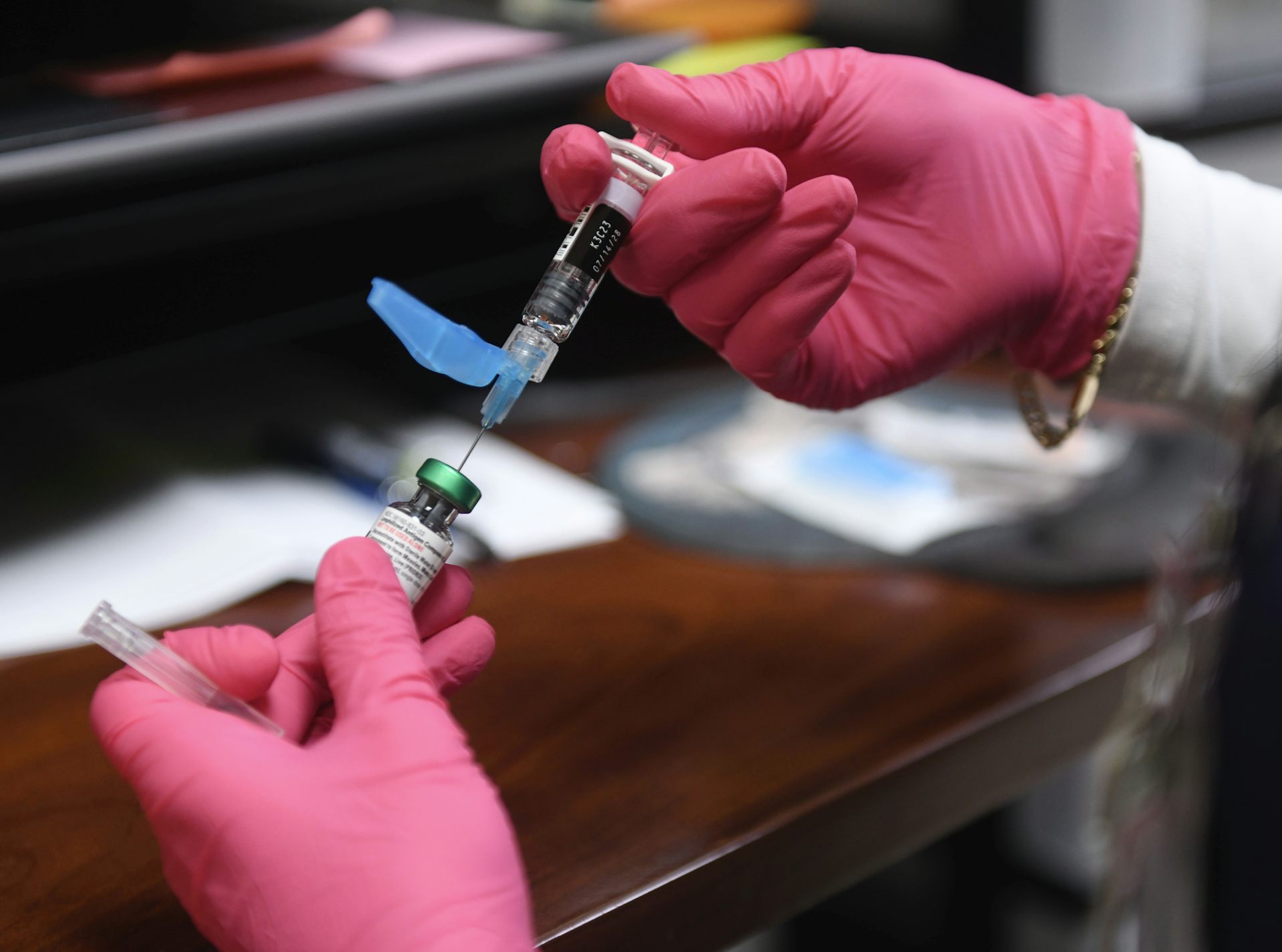

    Credit: Annie Rice/AP, provided by The Conversation

    There’s no fetal debris in the MMR vaccine


    Kennedy said “aborted fetus debris” in MMR vaccines is the reason many religious people refuse vaccination. He referred specifically to the Mennonites in Texas, a deeply religious community, who have been among the hardest hit by the current measles outbreaks.

    Many vaccines work by using a small amount of an attenuated (weakened) form of a virus, or in the case of the MMR vaccine, attenuated forms of the viruses that cause measles, mumps and rubella. This gives the immune system a safe opportunity to learn how to recognise and respond to these viruses.

    As a result, if a person is later exposed to the actual infection, their immune system can react swiftly and effectively, preventing serious illness.

    Kennedy’s claim about fetal debris specifically refers to the rubella component of the MMR vaccine. The rubella virus is generally grown in a human cell line known as WI-38, which was originally derived from lung tissue of a single elective abortion in the 1960s. This cell line has been used for decades, and no new fetal tissue has been used since.

    Certain vaccines for other diseases, such as chickenpox, hepatitis A and rabies, have also been made by growing the viruses in fetal cells.

    These cells are used not because of their origin, but because they provide a stable, safe and reliable environment for growing the attenuated virus. They serve only as a growth medium for the virus and they are not part of the final product.

    You might think of the cells as virus-producing factories. Once the virus is grown, it’s extracted and purified as part of a rigorous process to meet strict safety and quality standards. What remains in the final vaccine is the virus itself and stabilising agents, but not human cells, nor fetal tissue.

    So claims about “fetal debris” in the vaccine are false.

    It’s also worth noting the world’s major religions permit the use of vaccines developed from cells originally derived from fetal tissue when there are no alternative products available.


    Are there fragments of DNA in the MMR vaccine?


    Kennedy claimed the Mennonites’ reluctance to vaccinate stems from “religious objections” to what he described as “a lot of aborted fetus debris and DNA particles” in the MMR vaccine.

    The latter claim, about the vaccine containing DNA particles, is technically true. Trace amounts of DNA fragments from the human cell lines used to produce the rubella component of the MMR vaccine may remain even after purification.

    However, with this claim, there’s an implication these fragments pose a health risk. This is false.

    Any DNA that may be present in this vaccine exists in extremely small amounts, is highly fragmented and degraded, and is biologically inert – that is, it cannot cause harm.

    Even if, hypothetically, intact DNA were present in the vaccine (which it’s not), it would not have the capacity to cause harm. One common (but unfounded) concern is that foreign DNA could integrate with a person’s own DNA, and alter their genome.

    Introducing DNA into human cells in a way that leads to integration is very difficult. Even when scientists are deliberately trying to do this, for example, in gene therapy, it requires precise tools, special viral delivery systems and controlled conditions.

    It’s also important to remember our bodies are exposed to foreign DNA constantly, through food, bacteria and even our own microbiome. Our immune system routinely digests and disposes of this material without incorporating it into our genome.


    This question has been extensively studied over decades. Multiple health authorities, including Australia’s Therapeutic Goods Administration, have addressed the misinformation regarding perceived harm from residual DNA in vaccines.

    Ultimately, the idea that fragmented DNA in a vaccine could cause genetic harm is false.


    The bottom line


    Despite what Kennedy would have you believe, there’s no fetal debris in the MMR vaccine, and the trace amounts of DNA fragments that may remain pose no health risk.

    What the evidence does show, however, is that vaccines like the MMR vaccine offer excellent protection against deadly and preventable diseases, and have saved millions of lives around the world.


    By Hassan Vally, Associate Professor, Epidemiology, Deakin University. This article is republished from The Conversation under a Creative Commons license. Read the original article.The Conversation

    sb admin
    Fri, 05/02/2025 – 15:56

    Categories

  • Superheroes Represent Something Different to Today’s Kids

    The newest generation of superheroes are complex, irreverent and exactly what our kids need

  • A Blockbuster ‘Muon Anomaly’ May Have Just Disappeared

    The most anticipated particle physics result of recent years is here—but the real news came one week before: the “muon g–2 anomaly” might have never existed

  • A Mysterious Kidney Disease Epidemic Is Killing Thousands of Young Men. What’s behind It?

    As cases of chronic kidney disease emerge in outdoor laborers around the world, scientists are finding that repeated damage from prolonged extreme heat seems to be a leading factor to kidney failure